
A logic model is a one-page diagram that shows how a program is meant to work, linking its resources and activities to the results it expects. Nonprofits, public health teams and universities use one to plan a program, and funders often ask for one in a grant application to see how the money will lead to change.
Below are 43 logic model templates. The set includes a blank logic model, simple and detailed versions, a program logic model and one from a university. A logic model example is included too, so you can see a finished model before you fill in your own. All are editable.
Work backwards. Start with the long-term change you want, then ask what has to happen first to get there. That keeps every activity tied to a clear reason.
Logic models are often used with other planning tools. See our problem statement templates, policy brief templates and after action review templates to evaluate results afterwards.
Professional Logic Model Templates
Detailed Logic Model Template
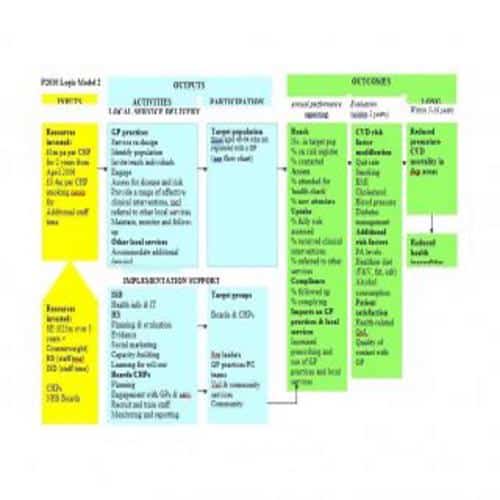
Blank Logic Model Template
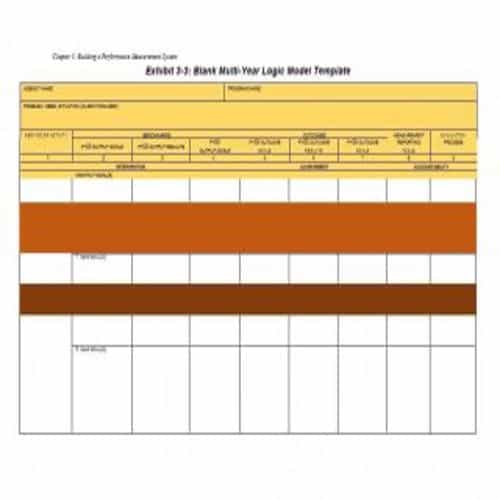
Example Logic Model Template
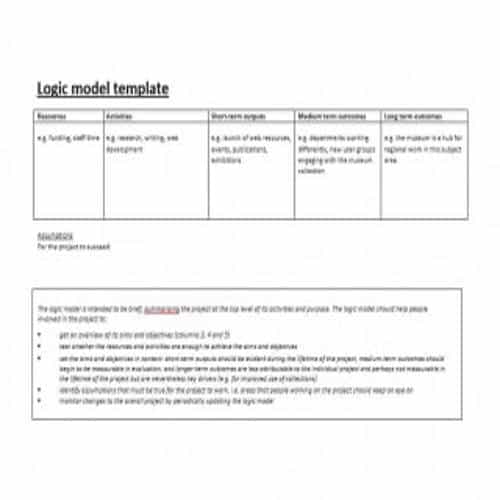
University’s Logic Model Template
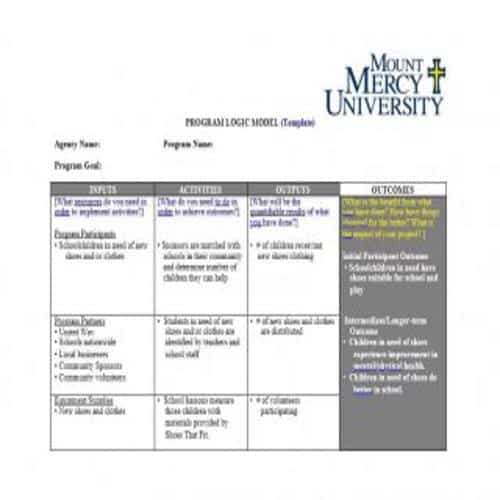
Program Logic Model Template
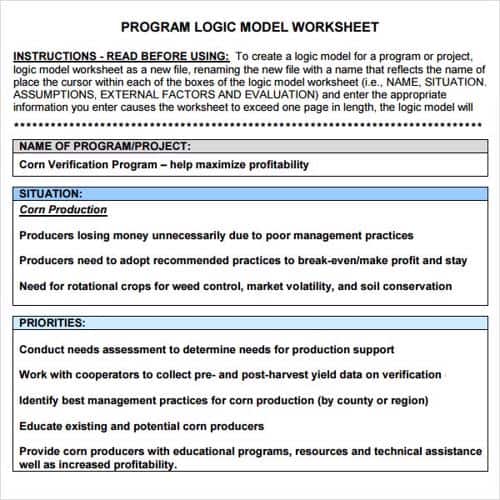
Simple Logic Model Template
Catchy Logic Model Template
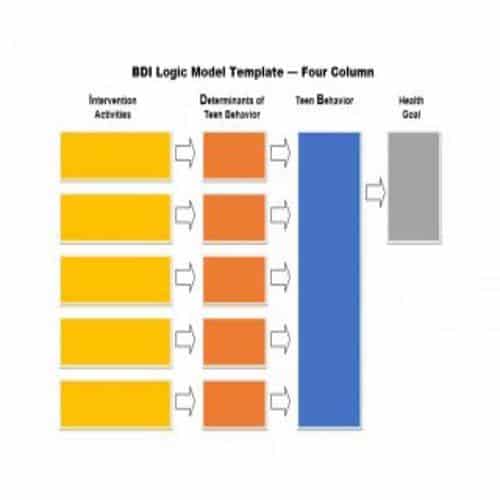
Special Logic Model Template
Illustrative Logic Model Template
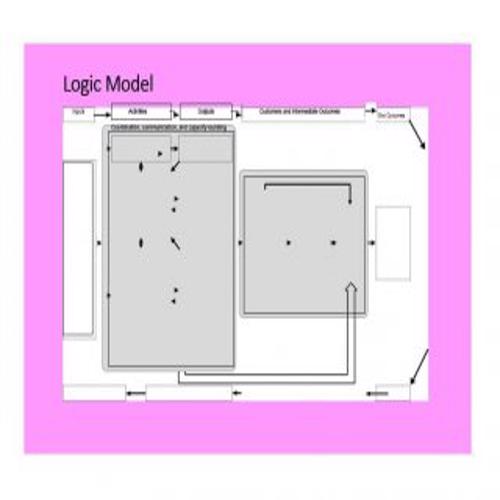
Complete Logic Model Template
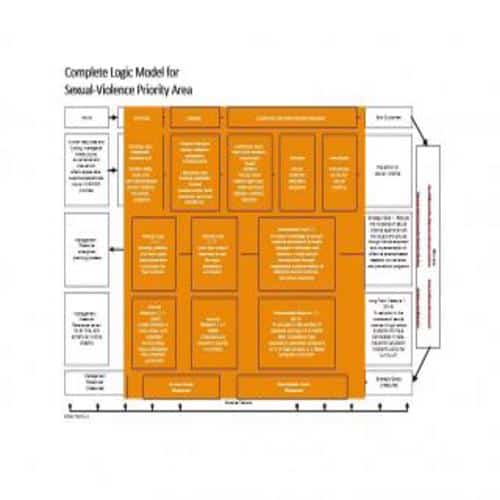
Sample Logic Model Template
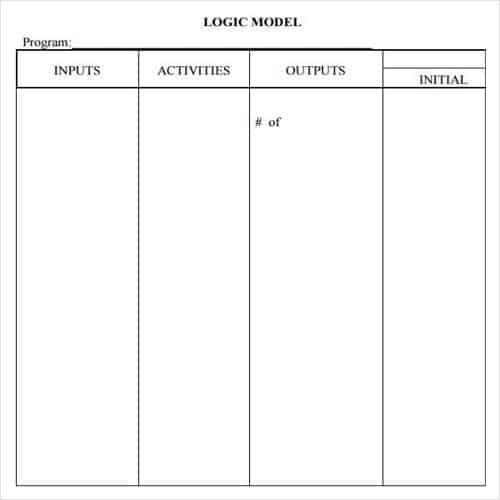
Specific Logic Model Template
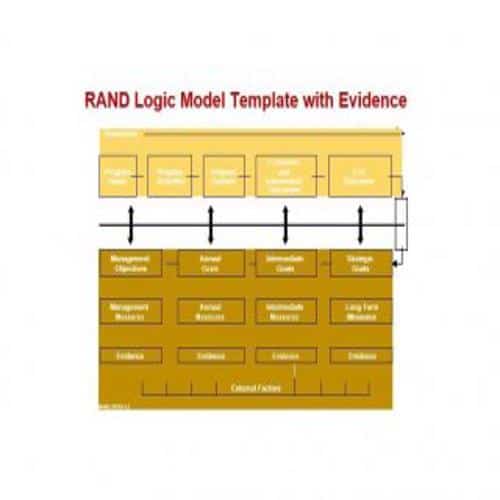
Formal Logic Model Template
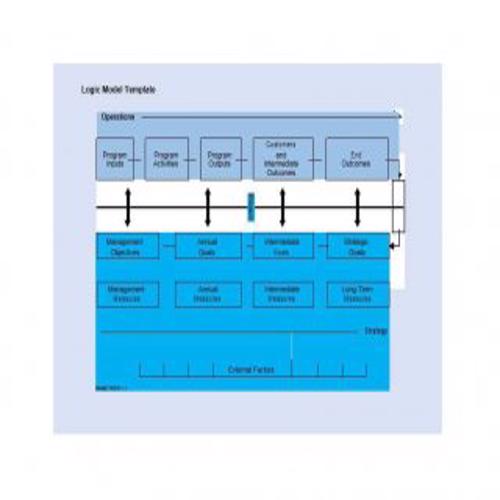
Logic Model Format Template
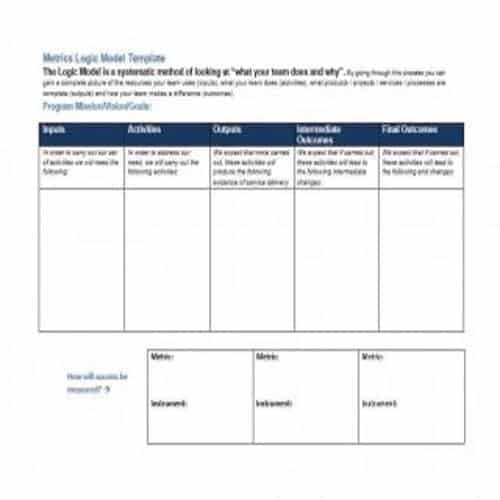
Extensive Logic Model Template
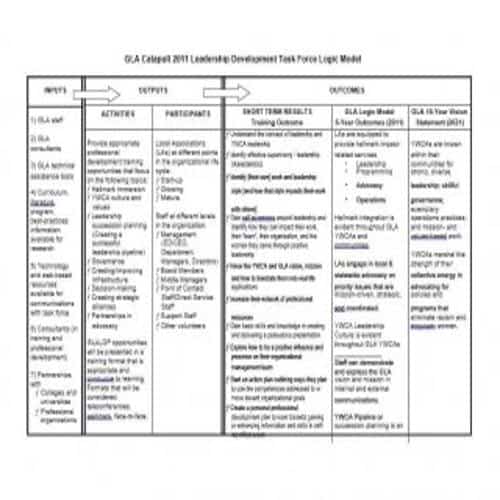
Essential Elements of a Logic Model Template
You can draft a logic model template in any way that suits you best. Its content depends on your particular task, project or program. However you format your logic model, include the following essential elements.
1. Opening statement:
The opening statement should include the issue or task for which a logic model is required.
2. Input:
These are the resources required or available to complete a task or resolve an issue. ‘Resources’ means everything necessary for the job, such as materials and workforce.
3. Actions:
This section specifies the steps that will be taken, or the activities that will be performed, throughout the project using the available resources.
4. Tactics or Schemes:
Once the actions or activities are specified, the tactics for performing them are devised. Plan these tactics carefully so that the task can be performed effectively and efficiently.
5. End Results:
This section states the end results or outcomes expected from performing the actions according to the planned tactics and using the available resources.
6. Impacts:
At the end of the logic plan, describe in detail the impacts that the results are expected to have over time.
You can include the ‘impact’ section together with the ‘end results’ section or as a separate section.
Sample Logic Model Templates
Elegant Logic Model Template
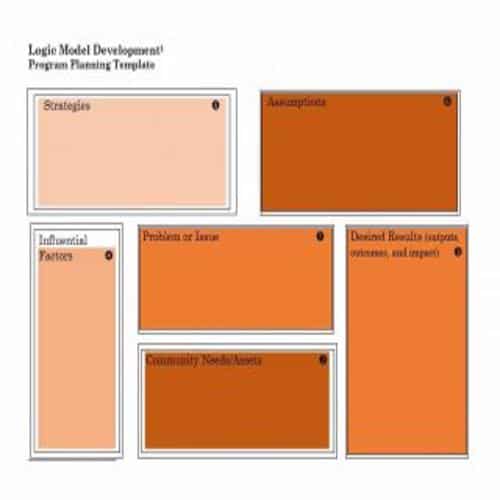
Plain Logic Model Template
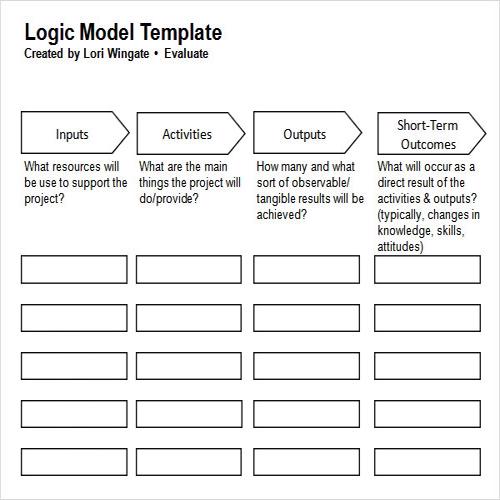
Logic Model Blank Template
Project’s Logic Model Template
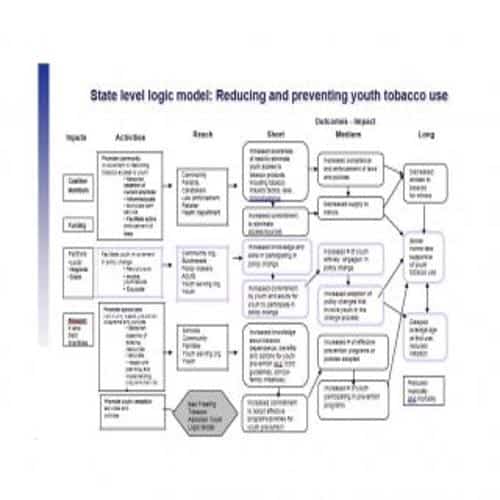
Particular Logic Model Template
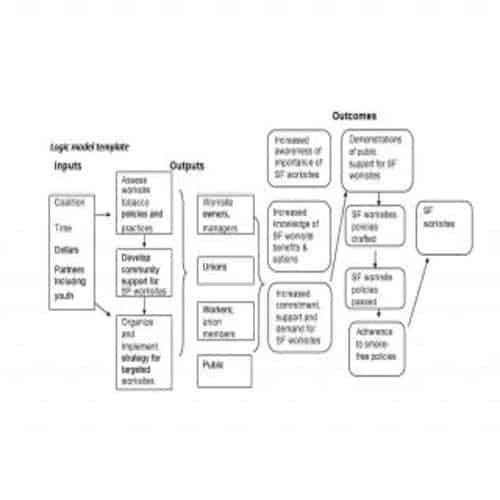
Elaborated Logic Model Template
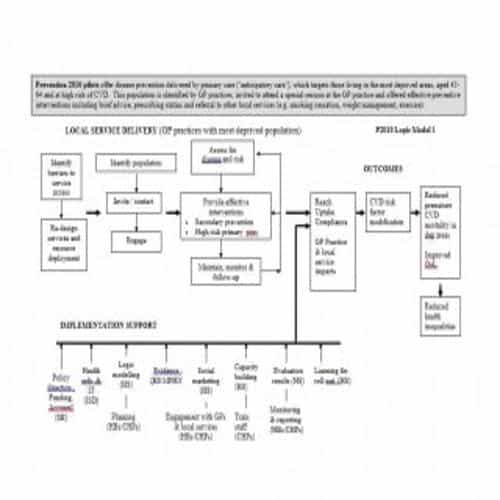
Logic Model Sample Template
Logic Model Diagram Template
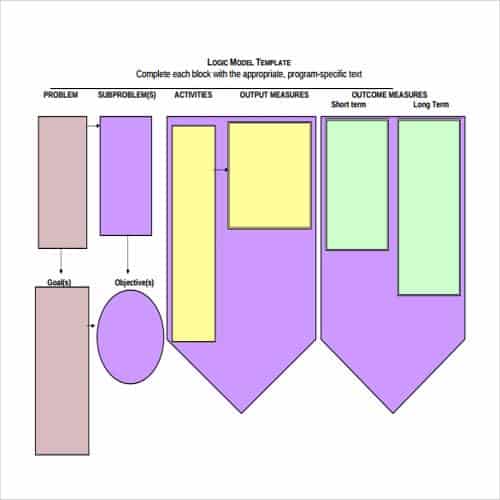
Brief Logic Model Template
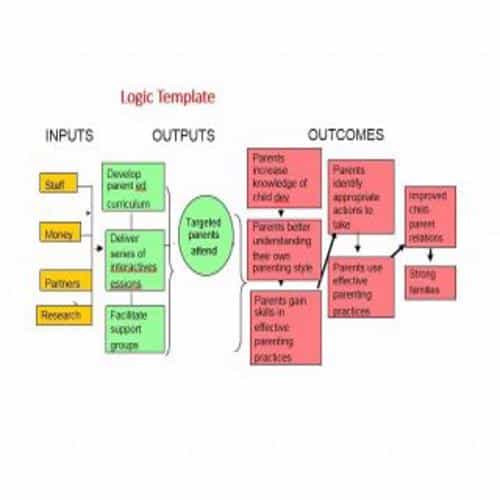
Regular Logic Model Template
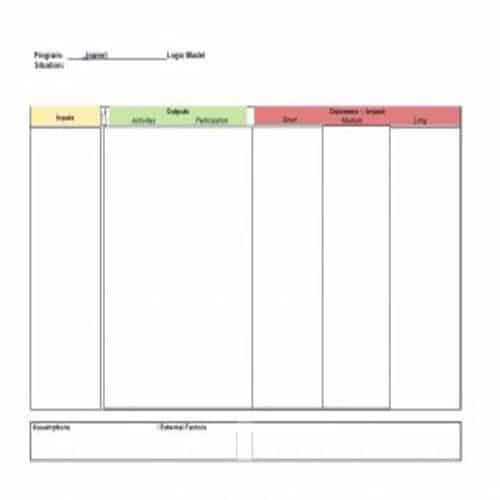
Colorful Logic Model Template
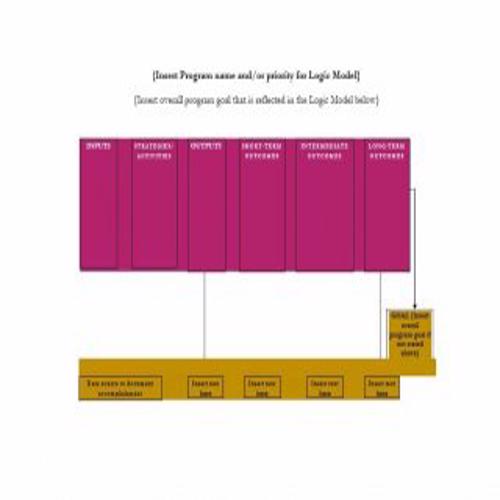
Thorough Logic Model Template
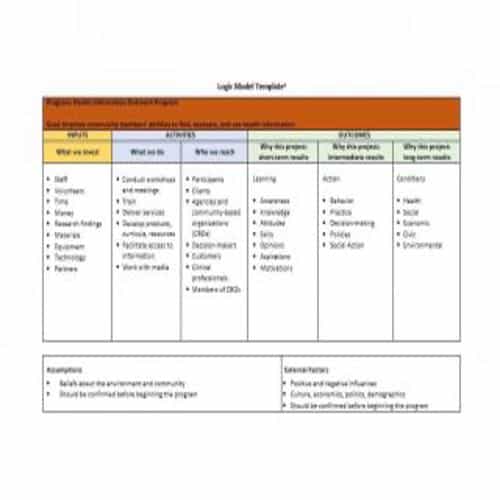
Logic Model Example Template
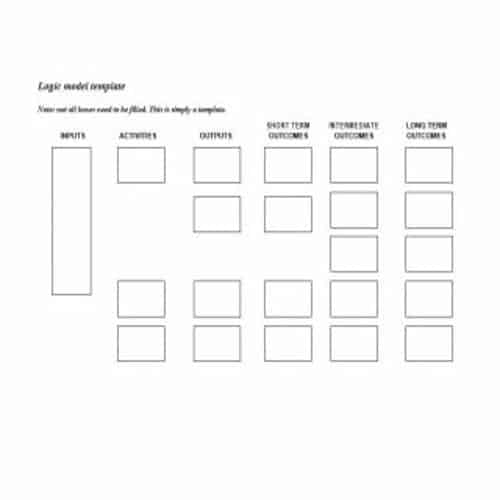
Exclusive Logic Model Template

Importance of a Logic Model Template
A logic model template is a very important document of a business, for following reasons:
- A logic model ensures that those funding the project are fully aware of the key activities to be performed, the expected results and the impacts of those results.
- Such a model ensures that everyone associated with the project clearly knows its targets or goals and is on the same page.
- It is also a great way to check that the design of an existing program or project is still suitable under current conditions.
- A logic model makes it easy to evaluate whether the expected end results of the program or project are still reasonable and logical.
- Such a model indicates whether or not a specific area requires adjustment or more effort or support.
- A logic model is an effective way to communicate the program or project to internal and external collaborators or stakeholders.
- With an effective logic model at hand, you can easily compare the actual results with the expected results and make any improvements or changes.
More Logic Model Templates
Attractive Logic Model Template
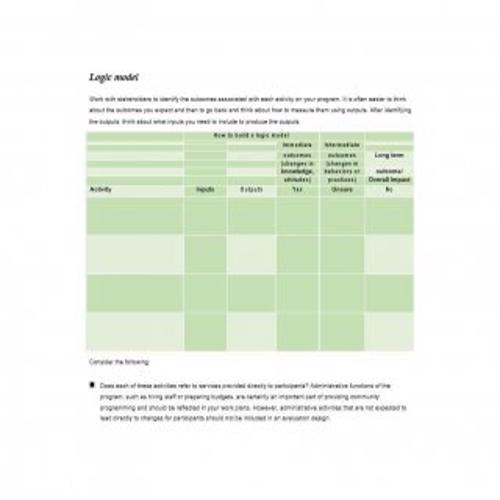
Logic Model Workbook Template
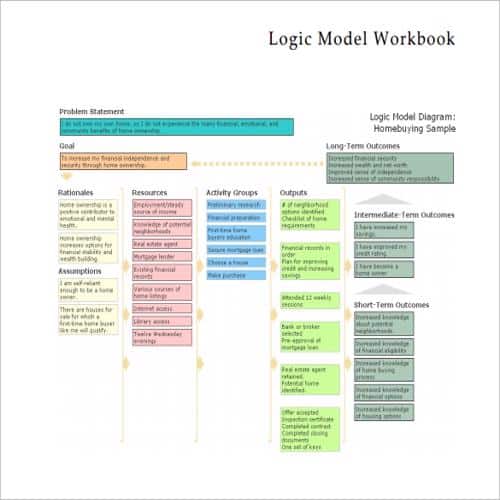
Model Logic Model Template
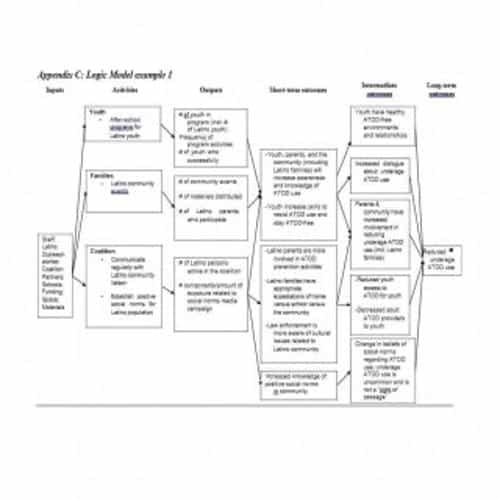
Basic Logic Model Template
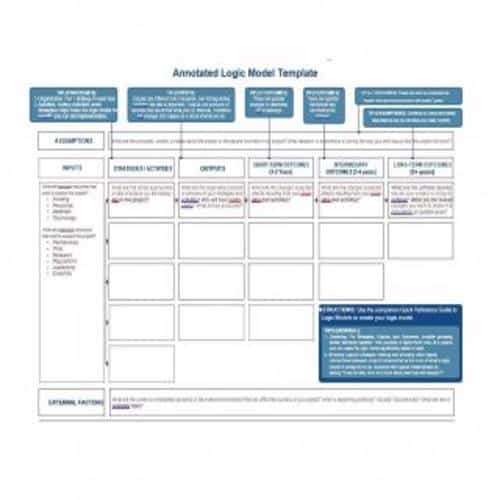
Vibrant Logic Model Template
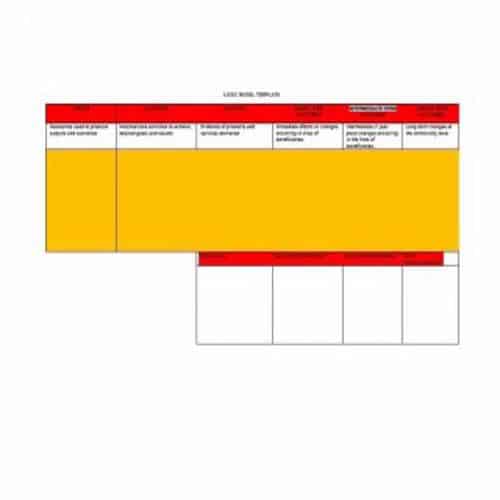
Logic Model Worksheet Template
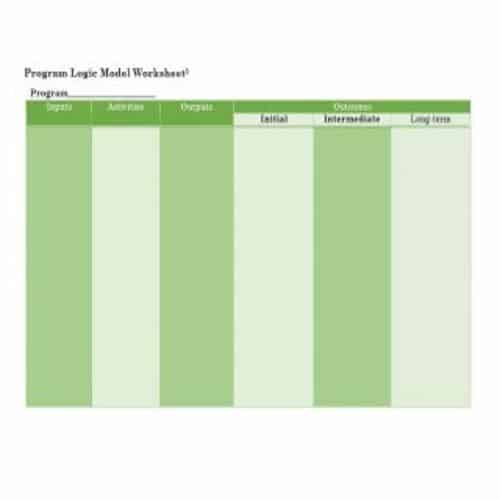
Elemental Logic Model Template
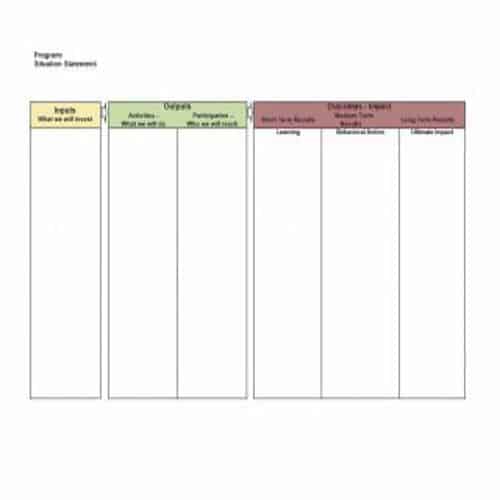
Formal Logic Model Template
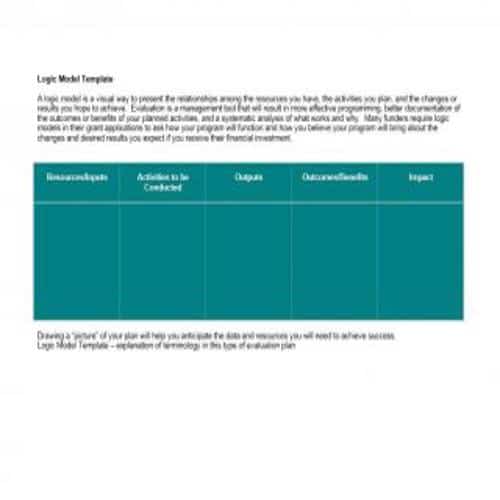
Sample Logic Model Template
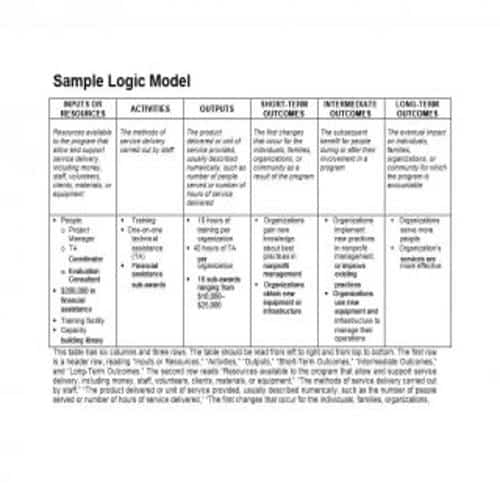
Important Logic Model Template
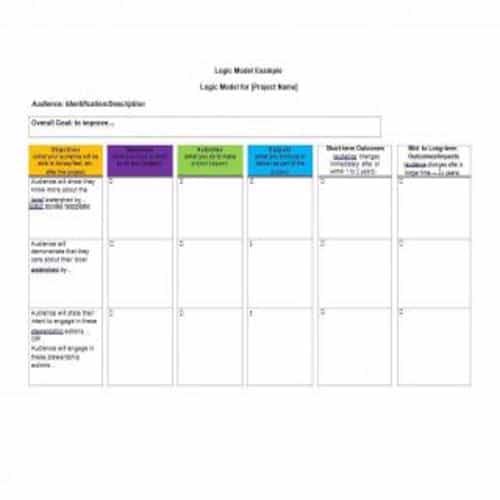
Logic Model Guidance Template
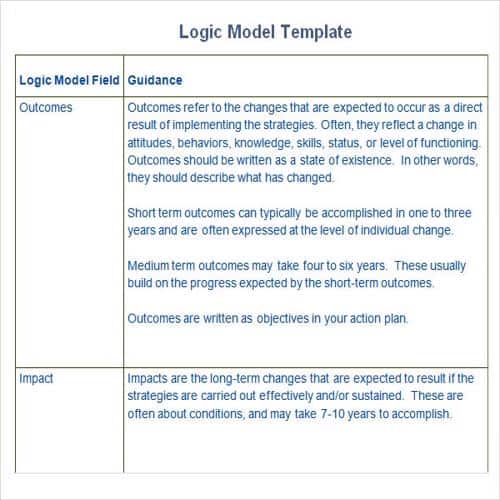
Useful Logic Model Template
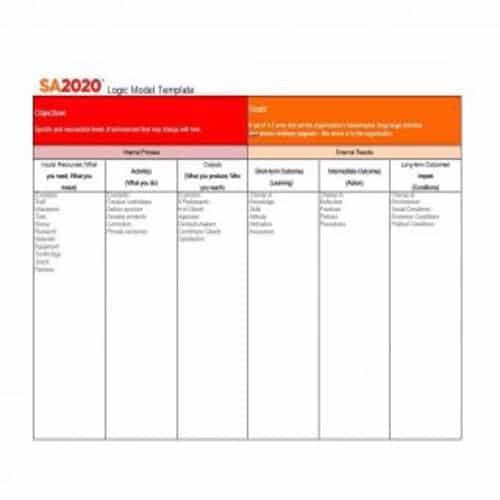
Usual Logic Model Template
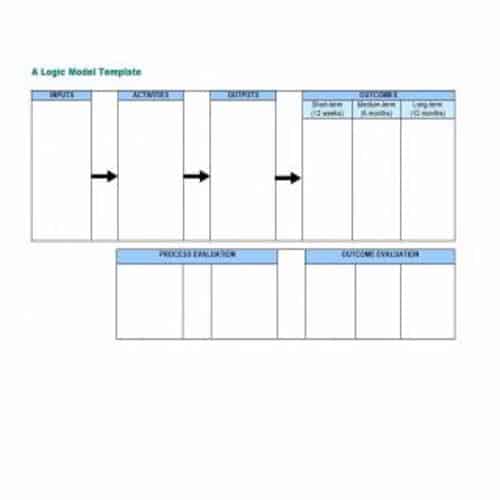
Effective Logic Model Template
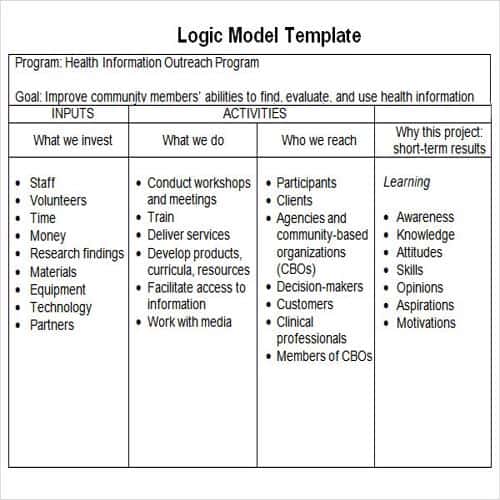
Connecting Activities to Outcomes in a Logic Model
Choose a model that explains the proposed chain from resources to results. The links are assumptions to examine, not proof that the programme will cause every desired outcome.
- Identify the need, participants and available inputs.
- Separate activities, outputs and short- and longer-term outcomes.
- State assumptions, external influences and measures for evaluation.
Worked Example
Example: a tutoring programme uses trained volunteers to deliver weekly sessions. The number of sessions is an output; improved reading comprehension is an intended outcome. Counting sessions alone does not establish that comprehension improved.
Common Mistakes to Avoid
Avoid describing every positive aspiration as a measurable result. Keep the model realistic about the programme’s contribution and other influences.
Related Templates
- Pareto Chart Templates
- Decision Matrix Templates
- Problem Statement Templates
- Value Chain Analysis Templates
Frequently Asked Questions
What is the difference between an output and an outcome?
An output is a direct product of the activity, such as sessions delivered. An outcome is a change for participants or the wider system.
Does a logic model prove impact?
No. It makes the intended pathway explicit and helps design evaluation. Evidence is still needed to assess whether the expected changes occurred.
