
Quick picks
A task analysis breaks a task into the small, ordered steps needed to complete it. Special education teachers and ABA therapists use it to teach skills such as handwashing or getting dressed one step at a time. Trainers and HR teams use the same method to map what a job really involves, and UX designers use it to see how people get things done.
There are 20+ free task analysis templates here. They cover hierarchical task analysis, cognitive task analysis, job task analysis, technical skills and educational versions, plus a skill-building sheet for tracking a learner’s progress. A sample job task analysis shows how much detail each step needs, and a quantitative layout helps when you are timing steps. Each task analysis worksheet is editable.
Watch someone competent do the task before you write the steps. People skip steps they do without thinking, and those are often the ones a learner gets stuck on.
Task analysis often feeds into training and procedures. See our standard operating procedure templates, instruction manual templates and training manual templates to turn each step into clear guidance.
Useful Task Analysis Templates
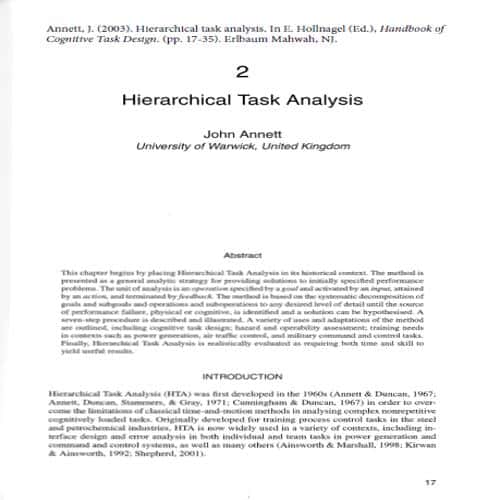
Hierarchical Task Analysis Template
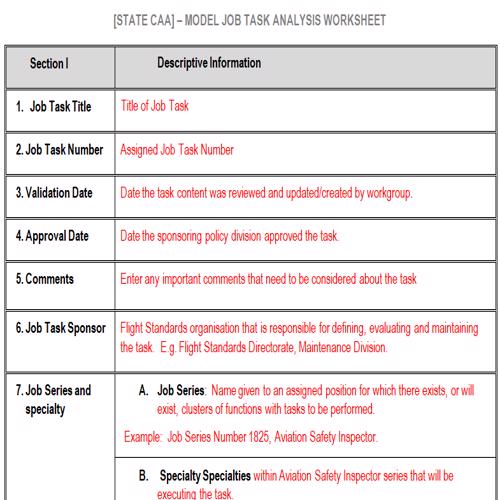
Model Job Task Analysis Template
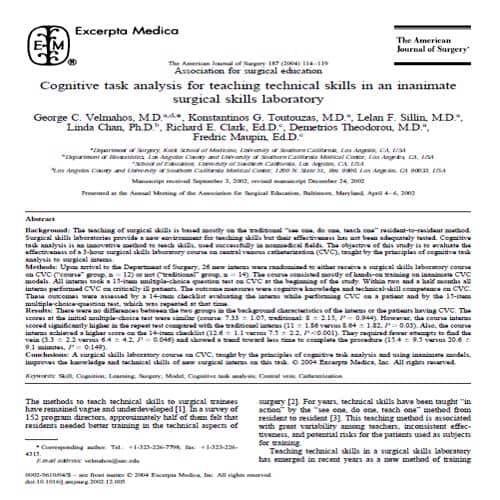
Technical Skills Task Analysis Template
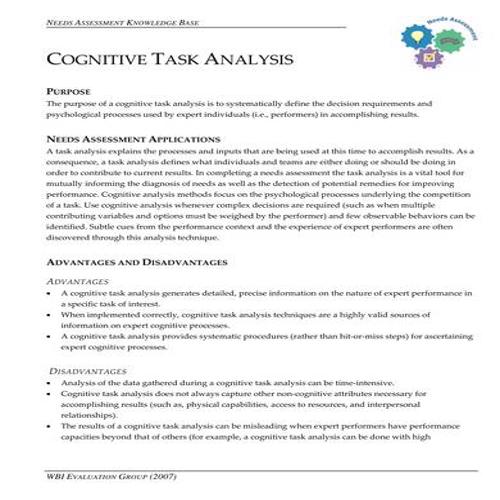
Useful Cognitive Task Analysis Template
Sample Job Task Analysis Template
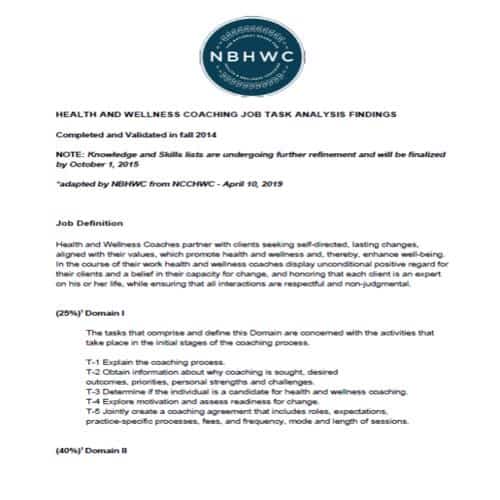
Educational Task Analysis Template
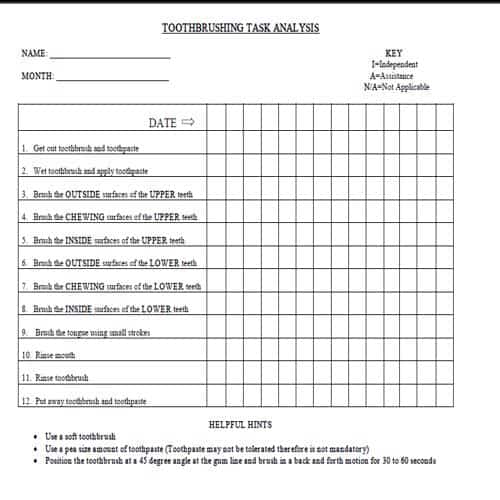
Quantitative Task Analysis Template
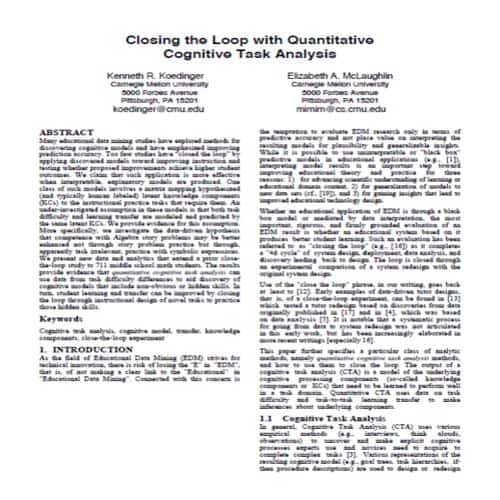
Skill Building Task Analysis Template
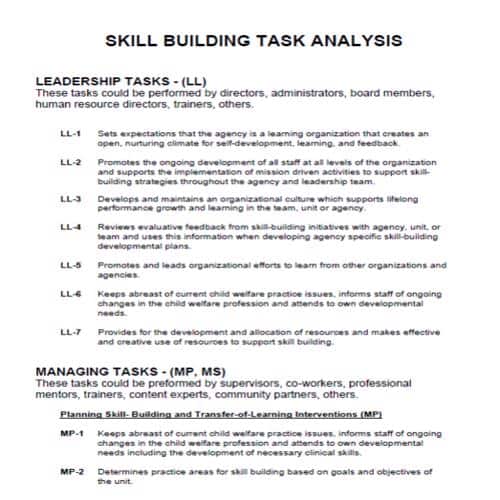
Usual Task Analysis Template
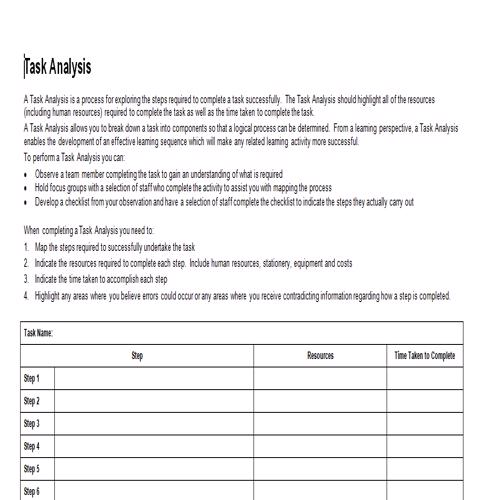
Task Analysis Report Template
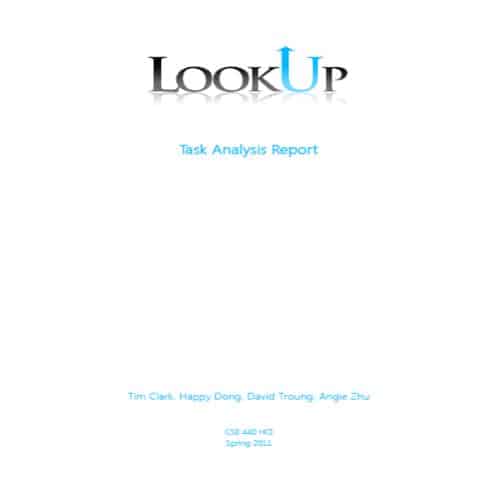
Official Task Analysis Template
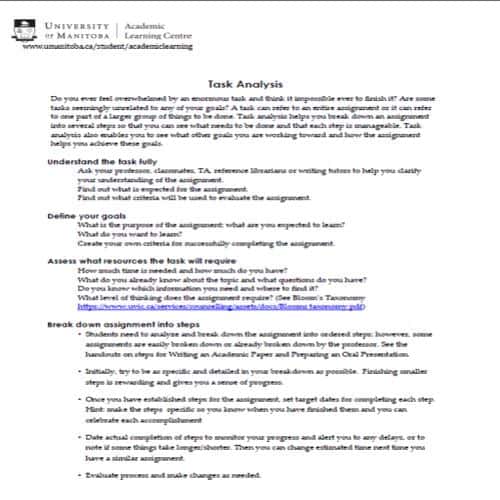
Stylish Task Analysis Template
Professional Task Analysis Template
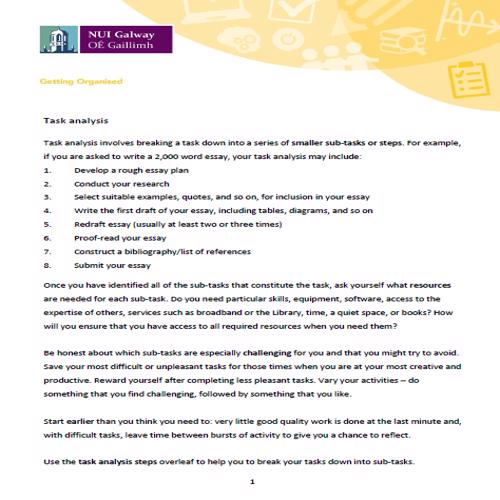
Tips for Writing an Effective Task Analysis
If you want to write a task analysis yourself, here are some useful tips for writing an effective one:
- Clearly describe the task, including the task number, its name, the person or team who will perform it, the products required, the location, the necessary tools and any other relevant general information.
- Mention the time period required to complete the task.
- Describe the expected results that each step or process will produce.
- Explain in detail the reasons for carrying out the task analysis.
- Provide complete list of each step of the task in the progressive order.
- When dividing the task into simple steps, consider the skill and knowledge level of the employees who will perform it.
- The task analysis must be very detailed. It must not miss even a small step, as that can produce unexpected results.
More Task Analysis Templates
Task Analysis Techniques Template
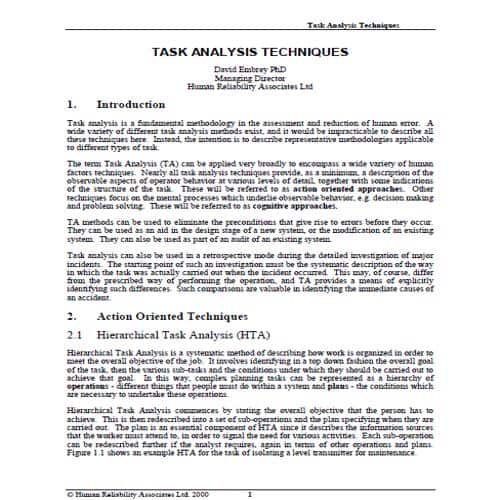
Informative Task Analysis Template
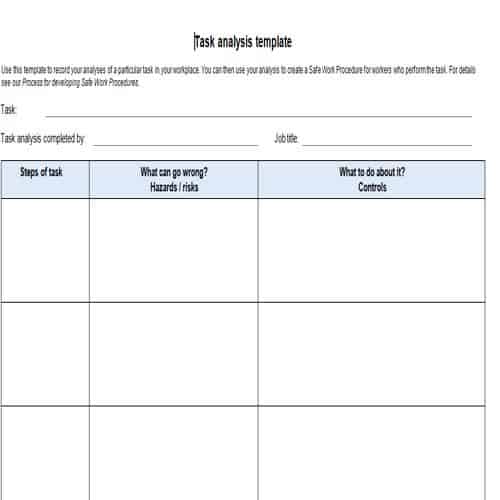
Module Task Analysis Template
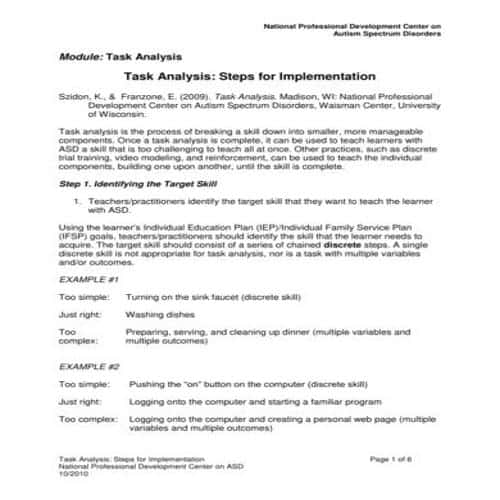
Scientific Task Analysis Template
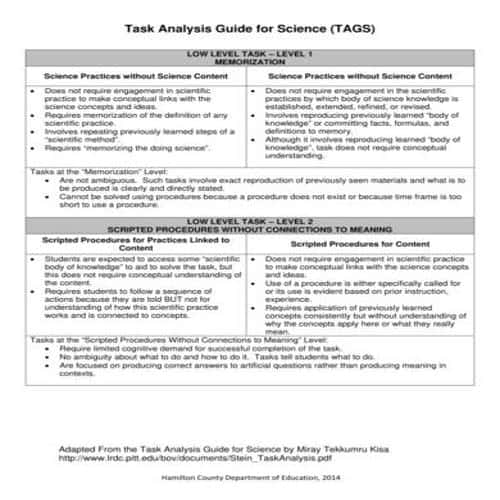
Planned Task Analysis Template
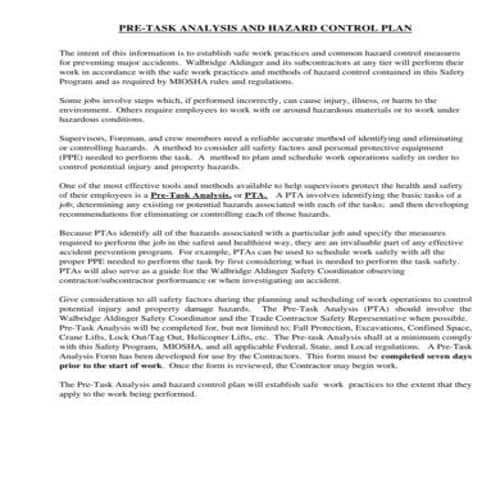
Corporate Task Analysis Template

Learning Task Analysis Template

Task Analysis Guide Template
Extensive Task Analysis Template

Special Task Analysis Template
Cognitive Task Analysis Template
Sample Task Analysis Template
Advantages of a Task Analysis
- A task analysis helps management identify potential hazards in the workplace and take reasonable steps to mitigate them.
- Related to the point above, by analyzing the workplace and the relationships between workers and tasks, management can easily set proper work procedures.
- A task analysis also helps management decide whether an employee is fit for a job. This way, jobs are assigned to the employees best suited to them.
- A task analysis can also show whether an employee or group of employees needs training.
- A task analysis clearly sets out each employee’s roles and responsibilities, so there is no confusion about who performs which task.
Breaking a Task Into Observable Steps
Choose a task-analysis format that matches the purpose: training, process improvement or observation. Define the intended user and starting conditions before deciding how finely to divide the steps. Once the task steps have been tested, WordNExcelTemplates’ checklist templates can turn the agreed sequence into a practical completion record.
- Observe the task and identify the starting point and completed outcome.
- Write observable actions in sequence and identify decision points.
- Trial the sequence with the intended user and revise missing or ambiguous steps.
Worked Example
Example: “Prepare an order for dispatch” can be split into checking the order, selecting items, verifying quantities, packing, labelling and recording dispatch. If a learner needs more support, item verification may need smaller steps. A supervisor may need only the main control points.
Common Mistakes to Avoid
Avoid assuming that the observer’s preferred method is the only workable method. Do not use a generic checklist as a substitute for specialist assessment when the context requires it.
Related Templates
- After Action Review Templates
- Instruction Manual Templates
- Daily Planner Templates
- Standard Operating Procedure Templates
Frequently Asked Questions
How small should each step be?
Small enough to observe or teach reliably for the intended user. Too much detail can obscure the task; too little can hide assumptions that cause errors.
How is task analysis different from an SOP?
Task analysis breaks down and examines the work. An SOP communicates an approved way to perform it. An analysis can inform the procedure, but the documents have different purposes.
