
A petty cash log is a record of every small cash payment made from a business’s petty cash fund, along with each top-up. It shows where the money went, who received it and how much is left, so the cash in the box always matches the books. Offices, schools, shops and small businesses use one to cover small costs such as postage, snacks, taxi fares and office supplies.
This page offers 36 petty cash log templates, all editable and free to download. You’ll find a simple log, a formal version, a modern design, a petty cash log form, an institute log, a company log and a petty cash reimbursement form for replenishing the fund. Any of them can work as your petty cash book.
Count the cash and reconcile the log at the same time every week. Small gaps are easy to explain within days, but almost impossible to trace after a month.
To keep small cash spending in line with your main books, see our deposit slip templates, sales receipt templates and chart of accounts templates for recording each expense in the right account.
Official Petty Cash Log Templates
Simple Petty Cash Log Template
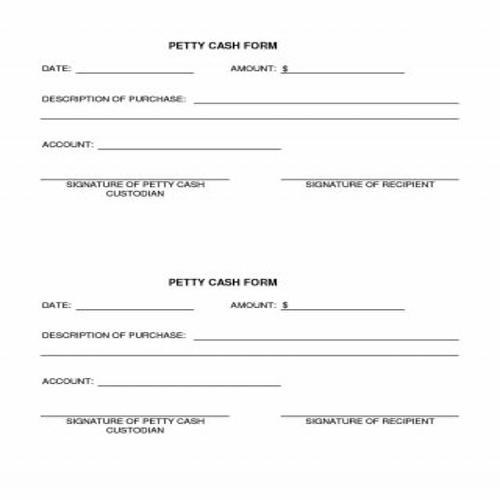
Formal Petty Cash Log Template
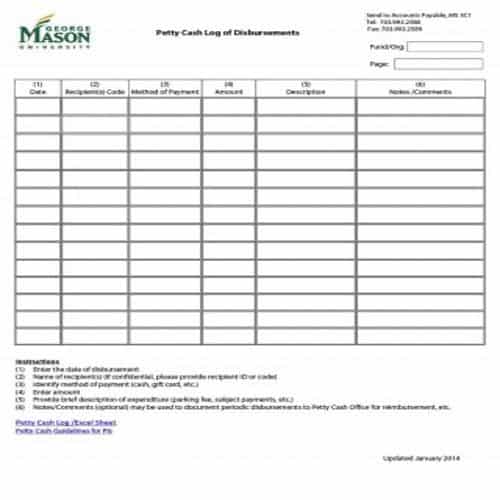
Modern Petty Cash Log Template
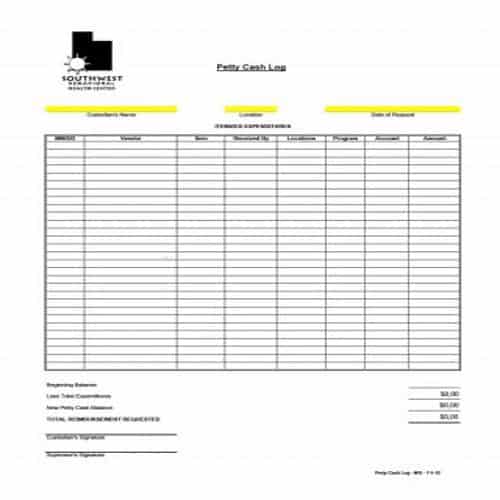
Petty Cash Log Form Template
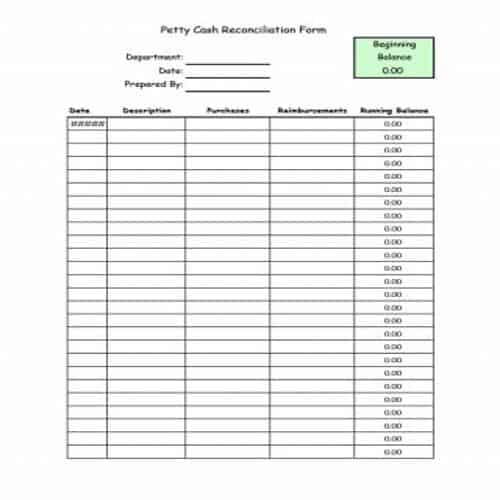
Institute’s Petty Cash Log Template
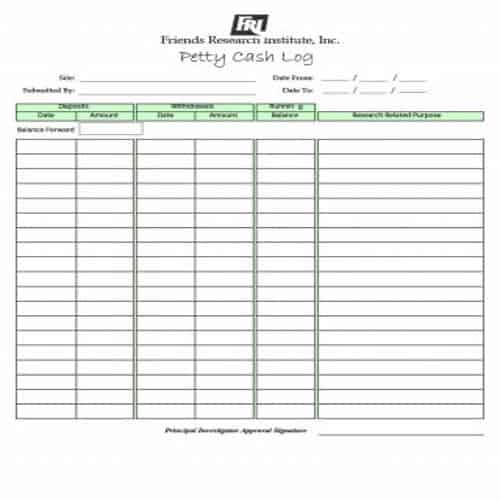
Company’s Petty Cash Log Template
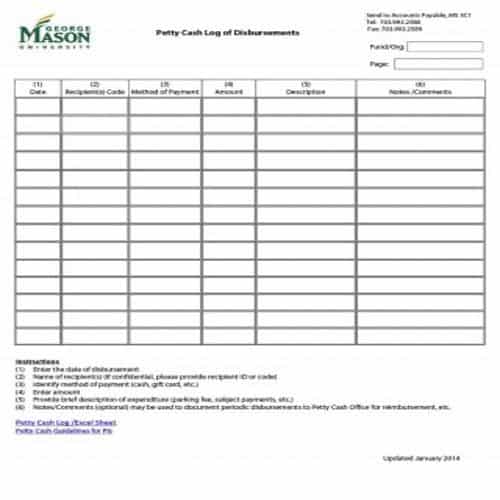
Decent Petty Cash Log Template

Petty Cash Reimbursement Template
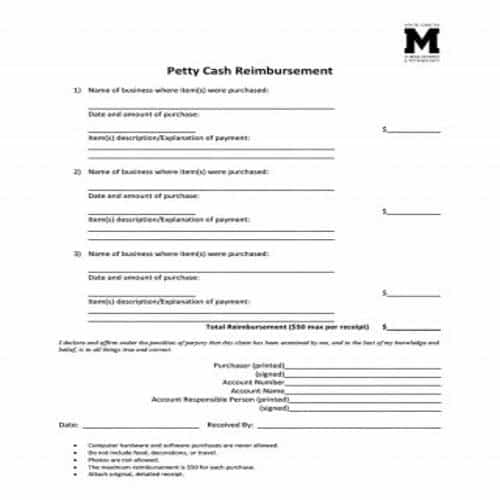
Standard Petty Cash Log Template
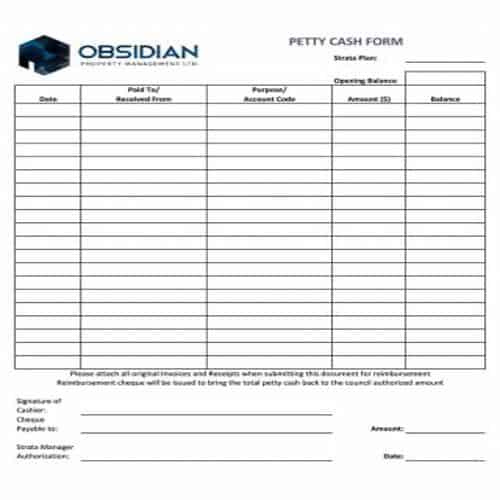
Detailed Petty Cash Log Template
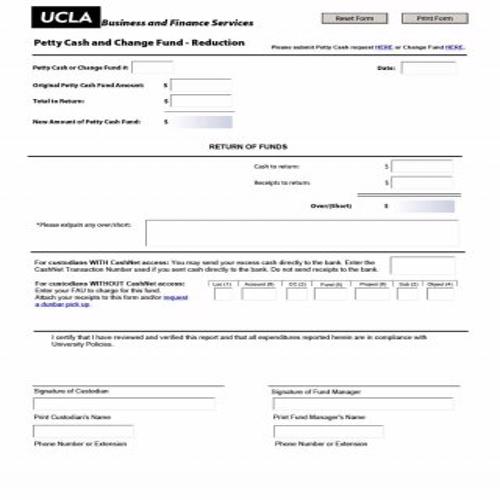
Company’s Petty Cash Log Template
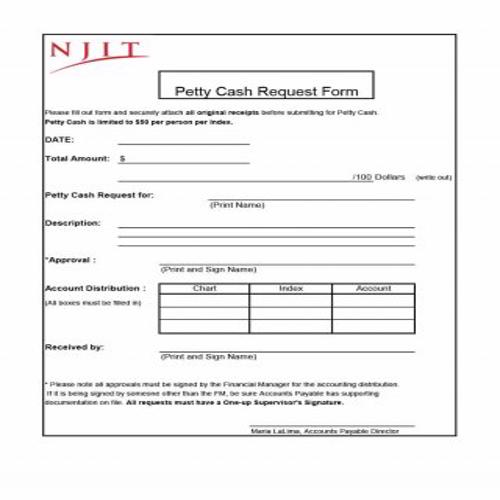
Columnar Petty Cash Log Template
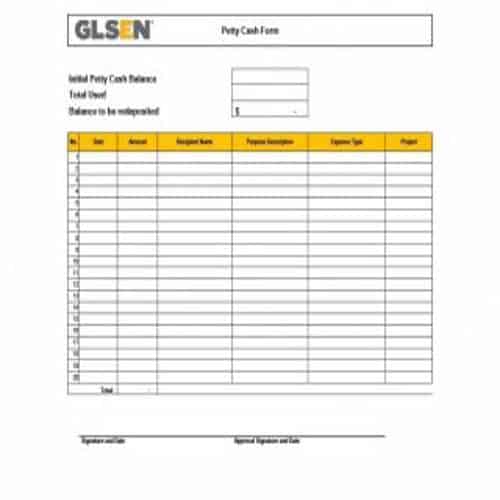
New Petty Cash Form Template
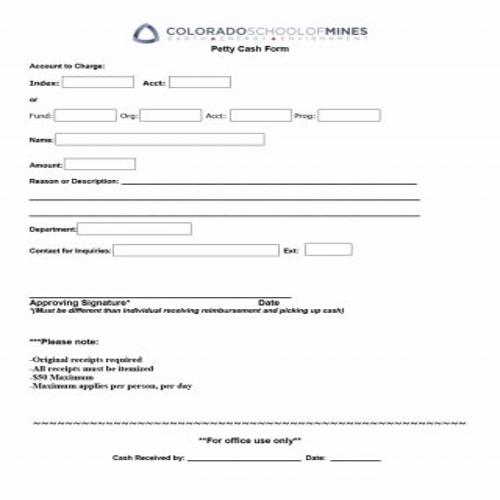
Basic Petty Cash Log Template
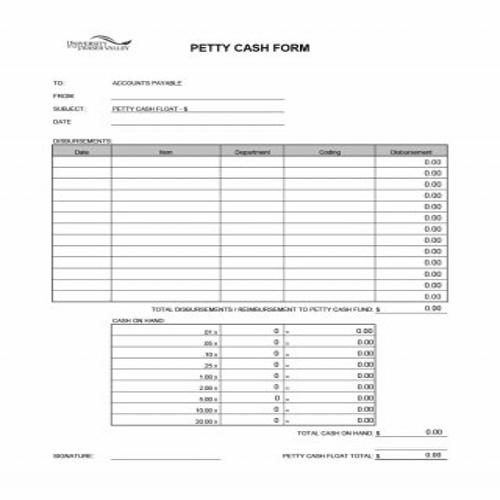
Special Petty Cash Log Template
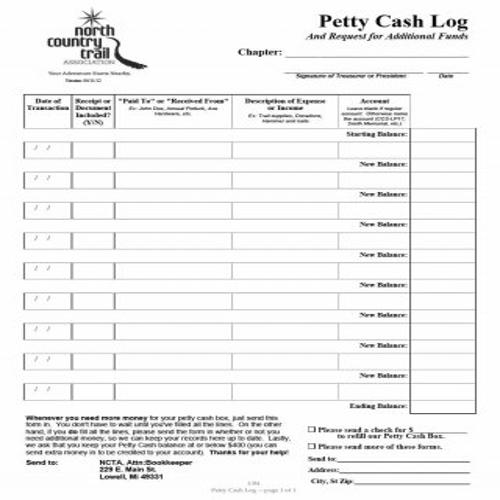
Brief Petty Cash Log Template
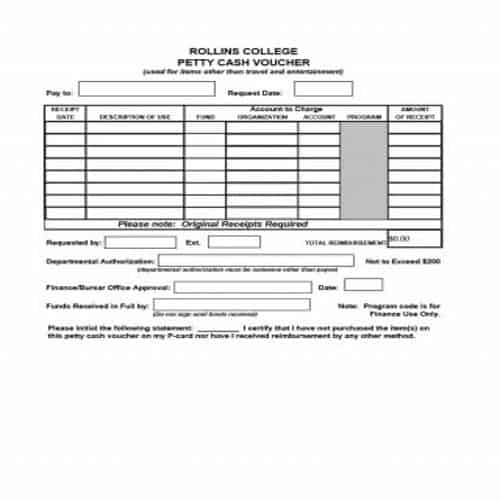
University’s Petty Cash Log Template
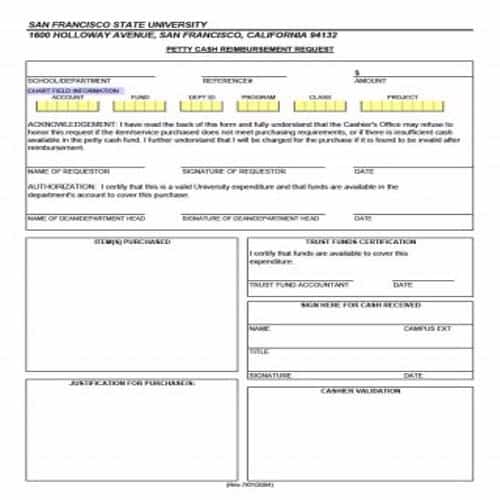
Routine Petty Cash Log Template
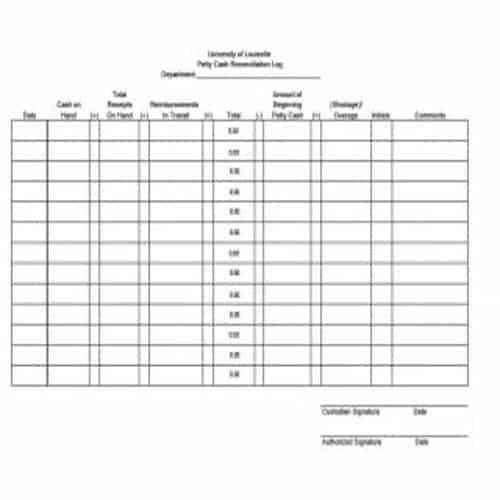
Petty Cash Reconciliation Log Template
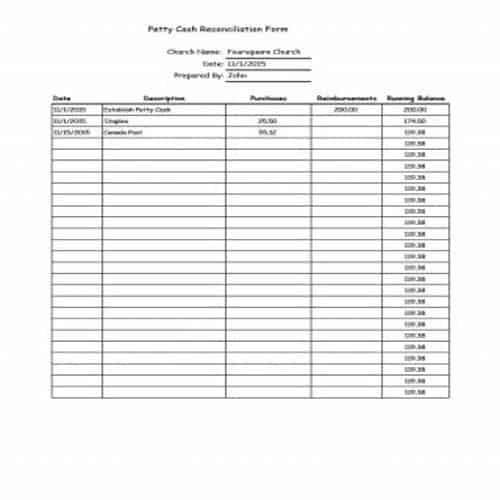
Petty Cash Disbursement Log Template
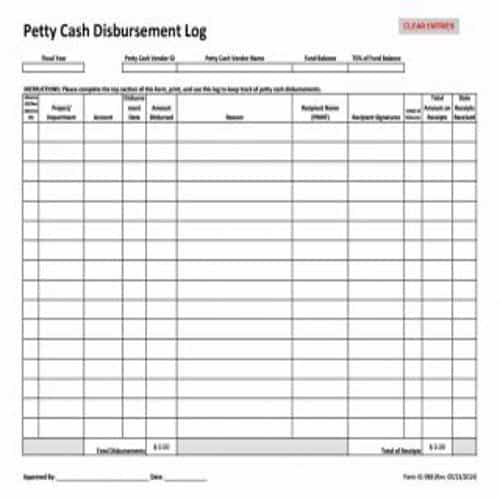
Importance of Petty Cash Log Template
A properly maintained petty cash log is very important because small amounts can go unnoticed and, in total, can add up to big mistakes or errors. Here are more reasons why a business needs a petty cash log template:
- Small transactions are properly recorded in a petty cash log, with all the details related to each transaction.
- Since the petty cash account is separate from the main cash, a petty cash log makes it easier to manage petty cash effectively and efficiently.
- A petty cash log helps keep all the documents related to petty expenses and payments organized on a daily basis.
- A standard petty cash log clearly shows the amount transferred to the petty cash account and all the payments made for petty expenses. It also helps detect any fraudulent or fictitious payments from the petty cash account.
- Writing checks for small amounts is inconvenient. A petty cash log removes the need to write checks for small amounts.
More Petty Cash Log Templates
Company’s Petty Cash Log Template
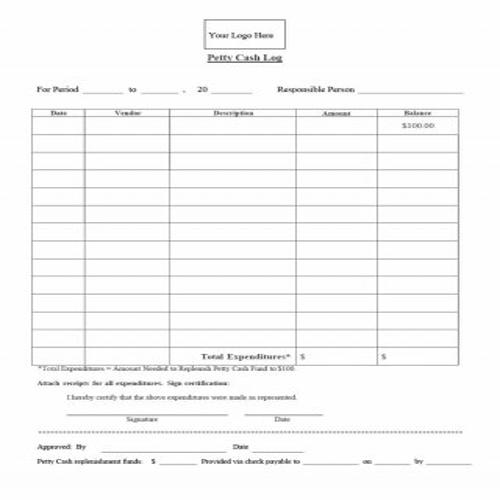
Official Petty Cash Log Template
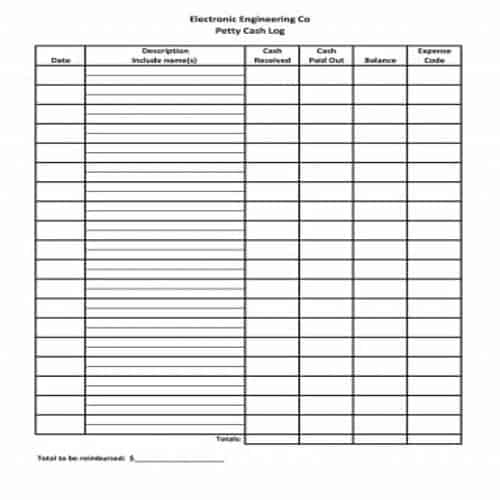
Standard Petty Cash Log Template
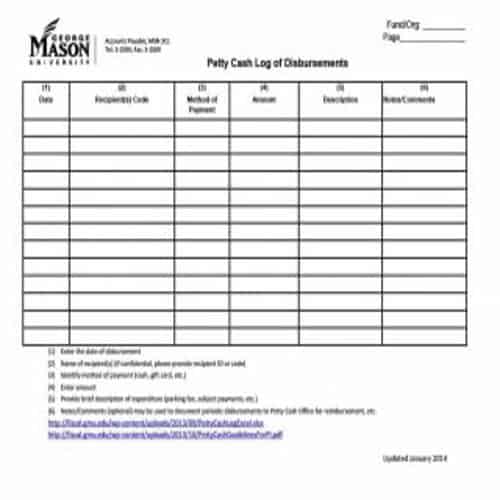
Descriptive Petty Cash Log Template
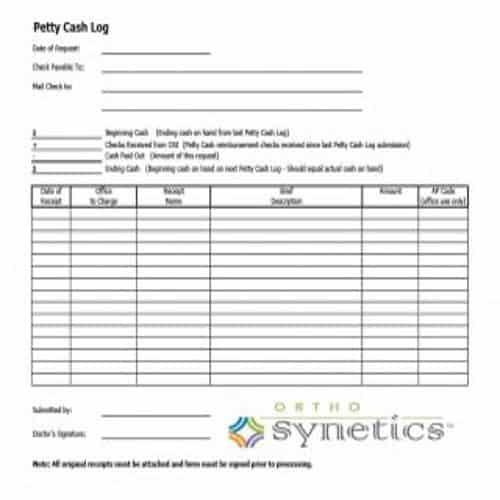
Departmental Petty Cash Log Template
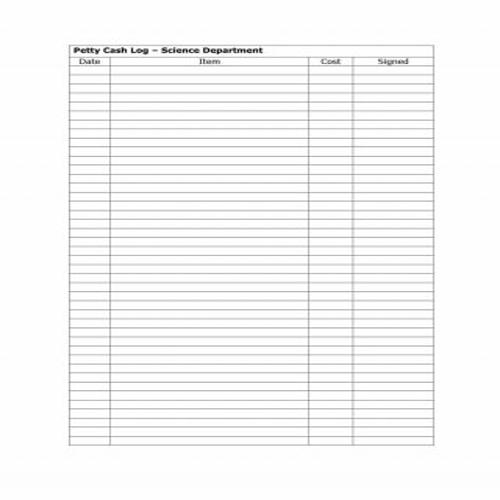
Simple Blank Petty Cash Log Template
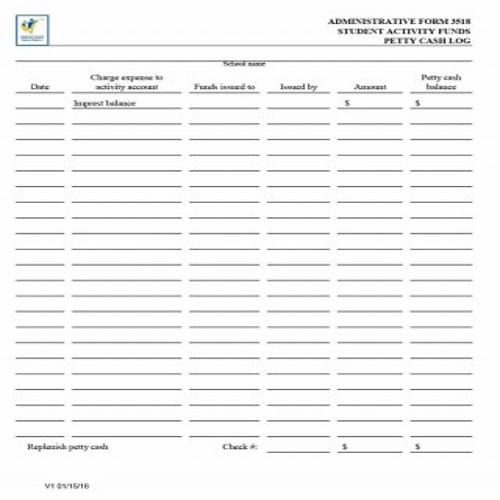
Petty Cash Transaction Log Template
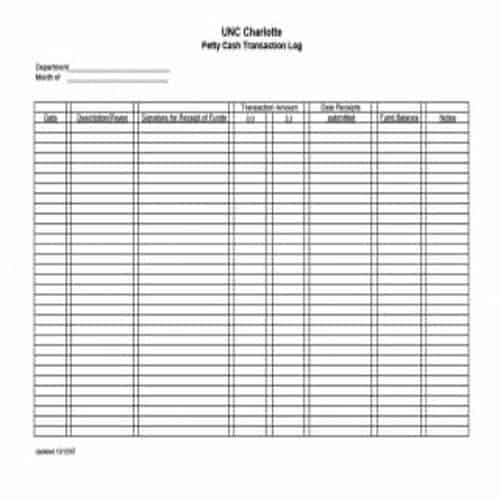
Highlighted Petty Cash Log Template
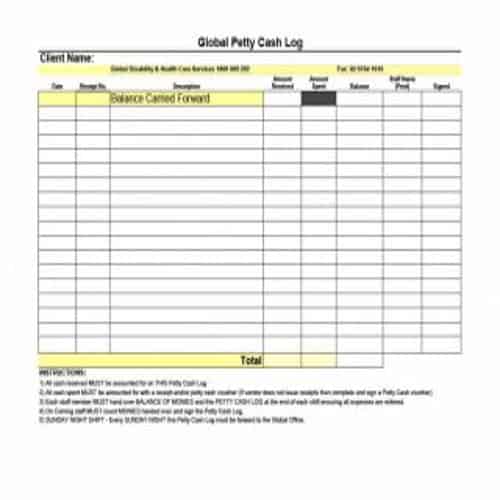
Petty Cash Fund Log Template
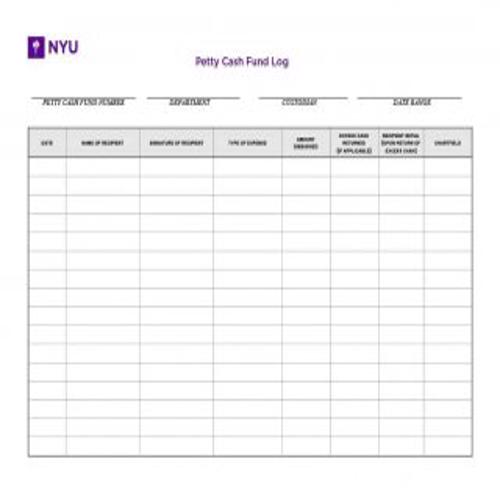
Basic Petty Cash Log Template
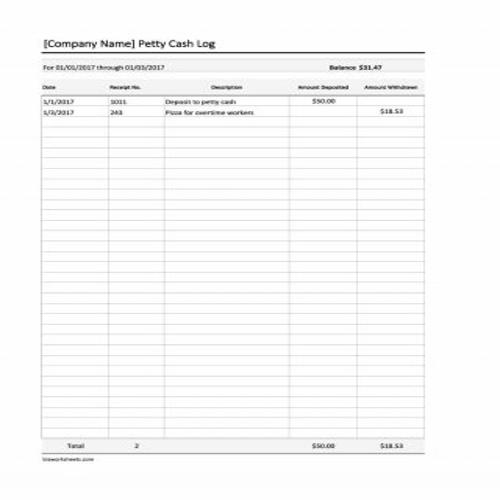
Business’s Petty Cash Log Template
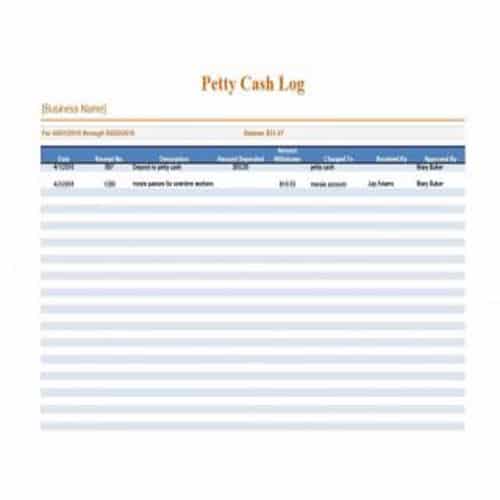
Petty Cash Record Sheet Template
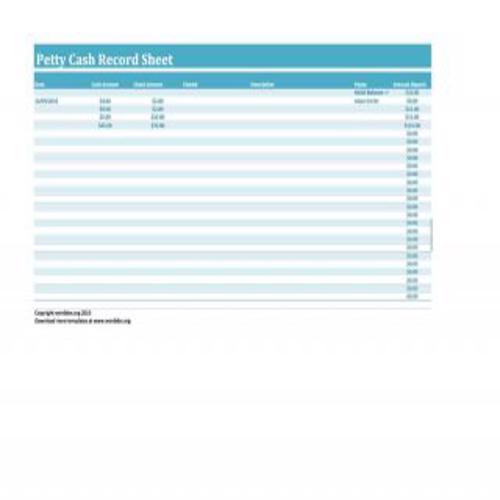
Sample Petty Cash Register
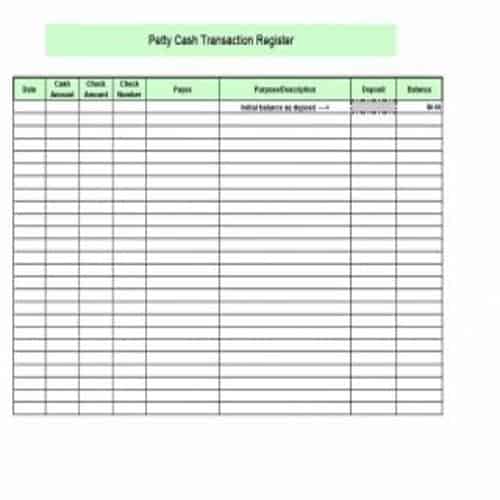
Detailed Petty Cash Log Template
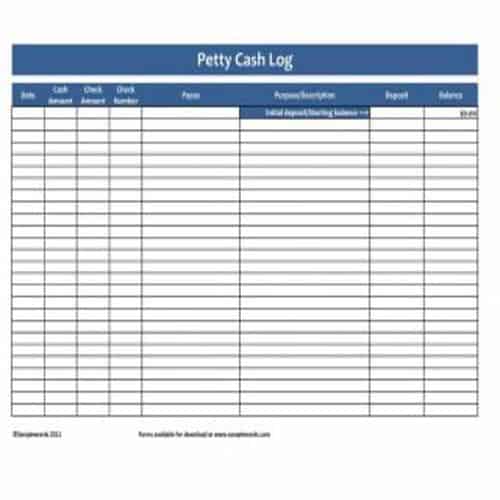
Simple Corporate Petty Cash Log Template
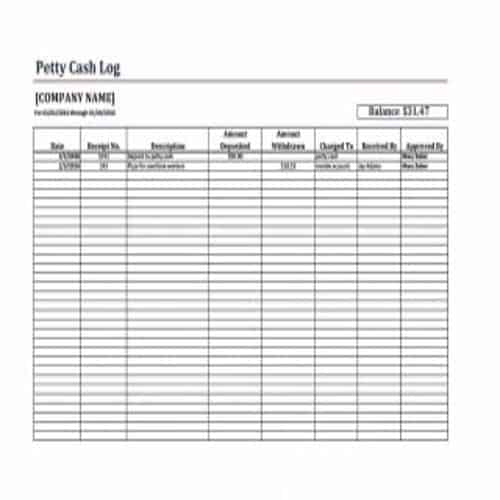
Conventional Petty Cash Log Template
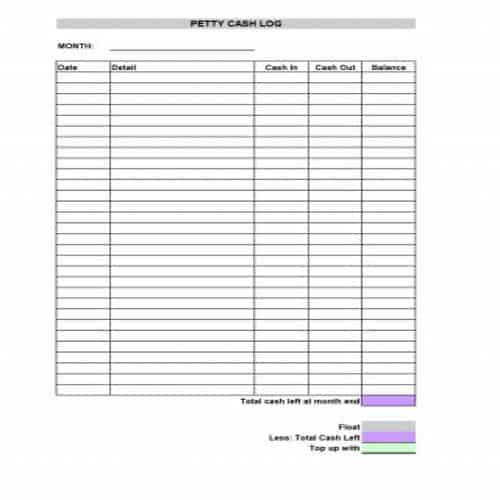
Types of Petty Cash Logs
You can prepare a petty cash log to suit the nature and size of your business and your own convenience. The most common types of petty cash logs are:
1. Simple:
This is the basic type of petty cash log, with a column for the amount and a column for the date. The amount received as petty cash is recorded on the debit side, and all payments for petty expenses are recorded on the credit side. At the end, any remaining balance is written.
2. Analytical:
In this type, each kind of expense is recorded in a separate column on the credit side of the log. Like the simple petty cash log, the debit side has only one column: the amount received as petty cash.
3. Columnar:
This type of log has many columns on the credit side, like the analytical petty cash log. The debit side has only one column, for the amount received as petty cash from the head cashier. On the credit side, expenses are recorded in date order and by category. A separate date column is also added.
4. Imprest:
The imprest petty cash log has almost the same layout as the columnar petty cash log. The main difference is that the head cashier provides the petty cash in advance to cover petty expenses for a particular period. When the period ends, the petty cashier submits a statement of all petty expenses to the head cashier. The head cashier verifies the statement and then pays the petty cashier the petty cash for the next period.
Reconciling a Petty Cash Log
Choose a log that records cash movements and supporting references. A fixed petty-cash float needs a clear reconciliation between cash on hand and documented expenditure. When a petty-cash payment needs an authorization record, WordNExcelTemplates’ payment voucher templates can be referenced from the log alongside the supporting receipt.
- Record the opening float and the custodian.
- Enter each payment or replenishment with a date, purpose and evidence reference.
- Count cash, reconcile the balance and investigate differences before replenishing.
Worked Example
Illustration: a float starts at 200 and documented payments total 65. Cash on hand should be 135 before any other movements. If only 130 remains, record and investigate the 5 difference; do not invent a receipt to force the total to match.
Common Mistakes to Avoid
Avoid treating reimbursements and original expenses as two separate costs. Keep approval and custody responsibilities appropriate to the organization.
Related Templates
- Deposit Slip Templates
- Billing Statement Templates
- Small Business Invoice Templates
- Bank Statement Templates
Frequently Asked Questions
What if a receipt is missing?
Follow the organization’s exception process and record the explanation and approval. Do not replace evidence with a fabricated document.
Should every payment be recorded immediately?
Prompt recording reduces omissions and makes reconciliation easier. Keep supporting records linked to the entry rather than relying on memory at the end of the month.
