
Quick picks
A standard operating procedure (SOP) is a written set of step-by-step instructions for doing a routine task the same way every time. It cuts errors, speeds up training and helps a business meet safety and quality rules. Labs, factories, restaurants, clinics and office teams write SOPs for tasks such as cleaning equipment, handling refunds or onboarding new staff.
Here you’ll get 30+ free SOP templates that are ready to edit. The set covers a simple SOP for short tasks, a detailed version for complex processes, a company-wide SOP, an explanatory layout with notes beside each step, and a plain SOP format you can adapt to any department. Use any of them as a standard operating procedure template for a new process or to tidy up an old one.
Before you publish, ask someone who has never done the task to follow the steps exactly. Wherever they hesitate, the SOP needs more detail.
SOPs are often supported by other operational documents. You may also need our instruction manual templates for step-by-step guides, training manual templates to teach the procedure, and equipment maintenance log templates to record routine checks.
Professional Standard Operating Procedures (SOPs) Templates
Proper SOPs Template
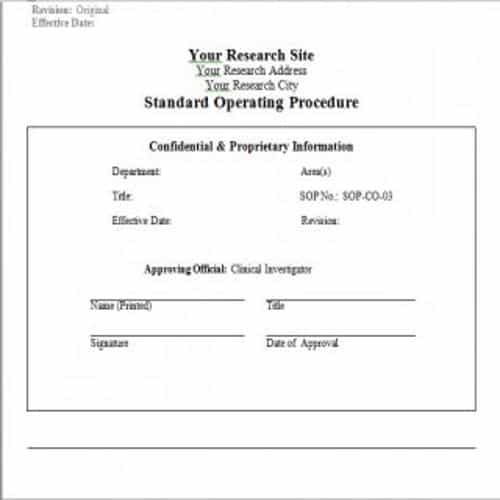
Detailed SOPs Template
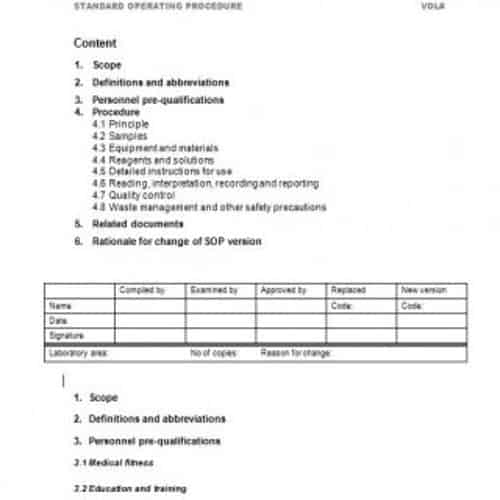
Company SOPs Template
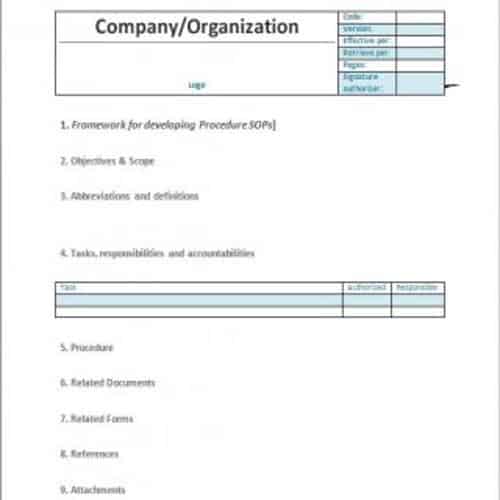
Format of SOPs Template

Regular SOPs Template
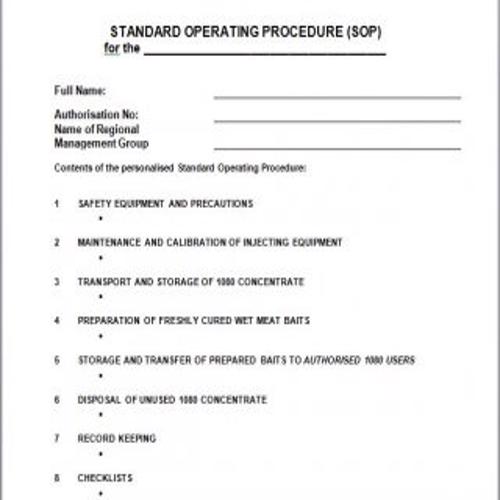
Simple SOPs Template
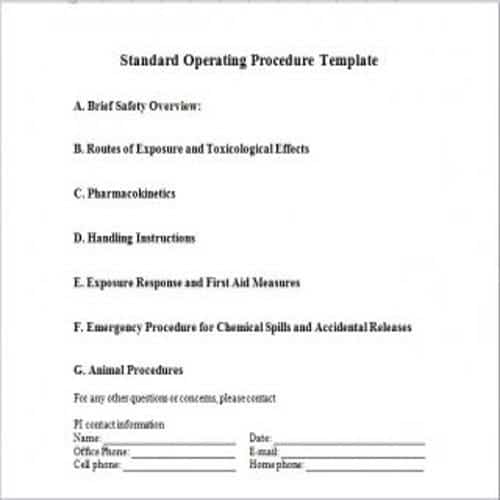
Exclusive SOPs Template
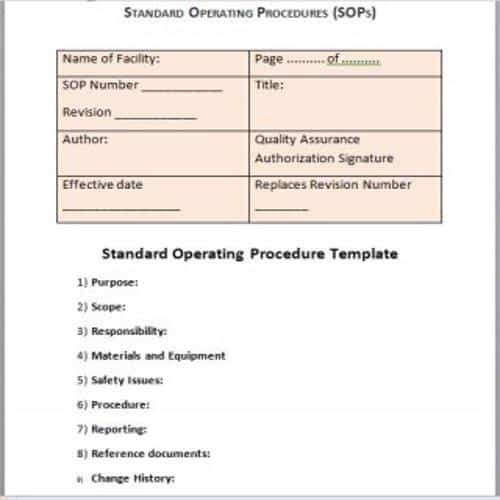
Explanatory SOPs Template
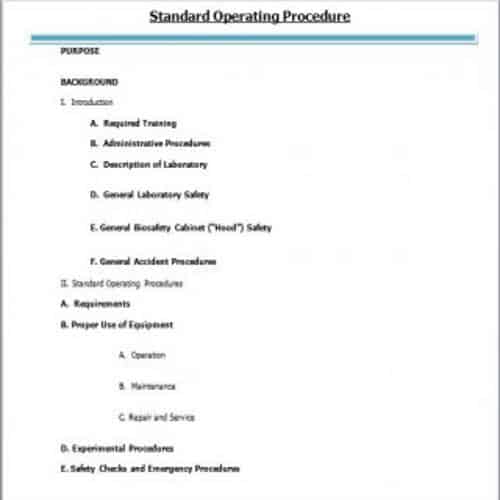
Corporate SOPs Template
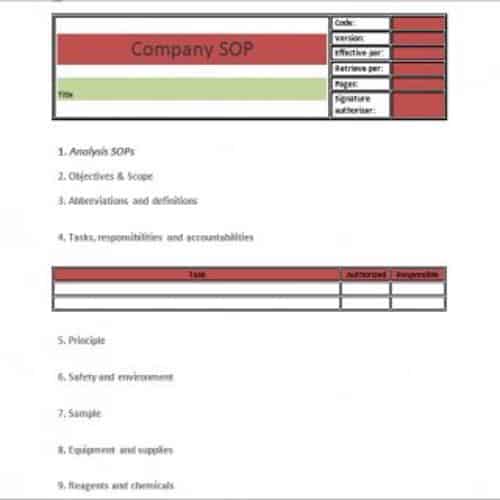
Organizational SOPs Template

Sample SOPs Template

Company’s SOPs Template

Plain SOPs Template

Elementary SOPs Template

Agency’s SOPs Template

Special SOPs Template

Example SOPs Template

Easy SOPs Template

Why SOPs are required?
A proper SOP is usually more detailed than a simple process description. It takes the components of a higher-level process and adds explanations, specific assignments and workflows in line with the standards of the organization or industry. An SOP template also explains what is required for a particular outcome. Additional information, such as who, when and where, can also be added. Here are some of the reasons why SOPs are required:
- For maximum productivity.
- Ensuring safety measures.
- For prevention of manufacturing faults and failures.
- For training.
- To make sure that the relevant standards are complied with.
- To make sure that any process or procedure has no adverse impact on the environment.
- To strictly follow the schedule.
Formal Standard Operating Procedures (SOPs) Templates
Precise SOPs Template

Brief SOPs Template

Safety SOPs Template

Sample SOPs Template

Exemplary SOPs Template

Detailed SOPs Template

Proper SOPs Template

Company’s SOPs Template

Usual SOPs Template

Extensive SOPs Template

Formal SOPs Template

Exclusive SOPs Template

Official SOPs Template

Handy SOPs Template

Daily SOPs Template

Basic SOPs Template

Modern SOPs Template

Benefits of Standard Operating Procedures (SOPs)
Following are some of the key benefits of properly written and documented standard operating procedures:
1. Employee Training:
Written SOPs for employee training make sure that all new hires get the same training, in the same manner and time frame, as existing employees. Such SOPs set a standard for orientation and training. They also help new employees settle in quickly and easily.
2. Reduction in Errors:
SOPs are written so that following them reduces errors and omissions to a great extent.
3. Increased Productivity:
Because SOPs clearly state what is expected from employees, they help daily operations and activities run smoothly. Smooth operations and fewer errors ultimately increase the organization’s production levels.
4. Consistency:
Building a brand takes a lot of effort and hard work. It doesn’t happen in a day, and a lot of time and struggle lies behind the success of every organization. This hard work should be protected by a properly written set of SOPs that keeps your business and all its operations and activities consistent.
5. Legal Requirements:
Depending on the nature of your business or your industry, SOPs are also important to protect your employees or customers. They help ensure that if something goes wrong, you will not be held legally responsible and any legal proceedings will have little or no impact on your business.
6. Chain of Command:
SOPs set out a clear chain of command within the organization. They can also show the management hierarchy. They explain where commands come from and where they are carried out. This is also important when a product is manufactured, reviewed and approved in multiple stages.
7. Transfer of Work:
Written SOPs clearly explain how the work will be done, particularly when an employee is on long leave. This makes sure the work is properly handed over and operations continue smoothly.
Writing an SOP Someone Else Can Follow
Choose a procedure layout for a repeatable task with a clear start and finish. A policy states a rule; an SOP explains the operational steps used to carry out work. For a retail setting, WordNExcelTemplates’ retail operations manual templates show how related procedures can be organized within a broader working manual.
- Identify the process owner, scope, prerequisites and required tools.
- Write the steps in working order, including decision points and exceptions.
- Test the draft with an appropriate user, approve it and assign a review date.
Worked Example
Example: an invoice-processing SOP identifies where invoices arrive, how supplier details are checked and who handles a mismatch. “Approve and pay invoices promptly” is a policy-style instruction; it does not tell a new employee how to perform the process or when to escalate a problem.
Common Mistakes to Avoid
Avoid recording passwords or confidential access details in a broadly distributed procedure. Keep version control so obsolete instructions are not used alongside the approved process.
Related Templates
- Instruction Manual Templates
- Equipment Maintenance Log Templates
- Task Analysis Templates
- Safety Plan Templates
Frequently Asked Questions
How detailed should an SOP be?
Detailed enough for the intended competent user to perform the task consistently. Include exceptions and references without repeating unrelated training material.
Who should test an SOP?
Someone familiar with the task and, where useful, a user representative who was not involved in drafting it. Testing should reveal missing assumptions and unclear steps.
