
A business requirements document (BRD) describes what a business needs from a project and why, before anyone decides how to build it. It records the objectives, scope and requirements that the sponsor, analysts and delivery team agree on. Business analysts and project managers write one at the start of a software rollout, a process change or a new product, and stakeholders sign it off before design work begins.
There are 43 editable options here. Start with a simple or brief BRD template for a small change, or pick a detailed business requirements document template for a large system. Functional and program requirements versions are included, along with a BRD example you can study before writing your own.
Write each requirement as one testable statement and give it an ID and a priority. That makes it easy to trace through testing and later change requests.
Once the requirements are signed off, see our scope of work templates to agree deliverables, project charter templates to formally launch the project, and work breakdown structure templates to split the work into tasks.
Professional Business Requirements Document Templates:
Simple Business Requirements Document Template

Program Requirements Document Template

Detailed Business Requirements Document Template
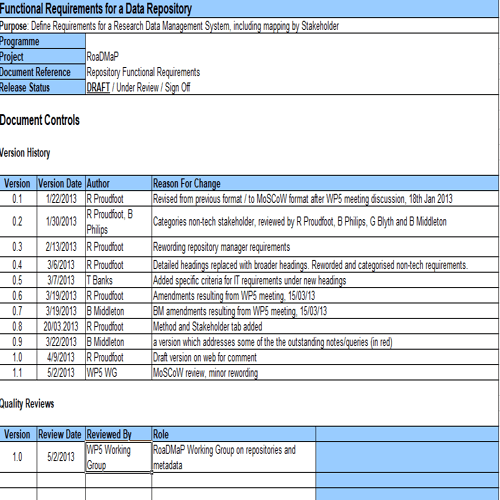
Sample Business Requirements Document Template

Exclusive Business Requirements Document Template

Functional Business Requirements Document Template

Basic Business Requirements Document Template

Brief Business Requirements Document Template

Business Requirements Document Worksheet Template

Blank Business Requirements Document Template

Project’s Requirements Analysis Document Template

Special Business Requirements Document Template

Informative Business Requirements Document Template

Unique Business Requirements Document Template

Comparative Business Requirements Document Template

Key Elements of a Business Requirements Document Template
Some key elements of a Business Requirements Document (BRD) template are listed below:
- Statement of scope of project.
- Problem statement of the business.
- Existing business process or system.
- Goals and objectives of the business.
- Standard or criteria for completion of the project.
- Key assumptions.
- Practical and impractical requirements.
- Current risks.
- Limitations being faced.
- Details of costs.
- Time tables and schedules.
- Latest or altered business process.
- Training standards or procedures.
- Details of stakeholders.
- Quality control or quality analysis procedures.
Important Business Requirements Document Templates
Extensive Business Requirements Document Template

Detailed Business Requirements Document Template

Business Requirements Document Matrix Template

Company’s Business Requirements Document Template

Special Business Requirements Document Template

Useful Business Requirements Document Template

Business Requirements Document Format Template

Example Business Requirements Document Template

Extensive Business Requirements Document Template

Formal Business Requirements Document Template

Explicit Business Requirements Document Template

Particular Business Requirements Document Template

Complete Business Requirements Document Template

Practical Business Requirements Document Template

System Requirements Document Template

6 Steps for Writing an Effective Business Requirements Document
A business requirements document is an important company document, so prepare it carefully and include all the relevant information.
Follow these six steps to write an effective business requirements document.
- First, gather the relevant information through brainstorming and discussions with developers, customers and other key people. Record everything you collect.
- Based on that information, describe the main features of the product. This gives a general picture of what the end product will be.
- State the scope of the project clearly so stakeholders know what is and isn’t included. This helps prevent mismanagement later.
- Fourth, identify the stages involved in completing the project.
- Next, analyze the whole project with a process map to see whether any adjustments are still needed.
- Finally, describe the likely impact on existing processes, technology and equipment, the people and teams involved, and the product itself. An impact assessment diagram can help here.


