
Quick picks
A cohabitation agreement is a written contract between two people who live together without being married. It sets out who owns what, how household costs are split and what happens to property and debts if the relationship ends. Unmarried couples buying a home together, moving into one partner’s place or combining finances use one to avoid disputes later. It is also called a living together agreement.
This collection offers 32 free cohabitation agreement templates. You’ll find a basic agreement, a detailed and an extensive version, a provisions template listing common clauses, and an intake form to gather each partner’s information first. There are also premarital agreement forms, including a state-specific one, for couples planning to marry. Every cohabitation agreement sample is editable.
Each partner should get independent legal advice before signing, since enforcement rules differ by state and country. Review the agreement whenever you buy property or have children.
Couples who live together may also need our rent receipt templates for shared housing costs, power of attorney templates, and letter of intent to purchase property templates if you are buying a home together.
Best Cohabitation Agreement Templates
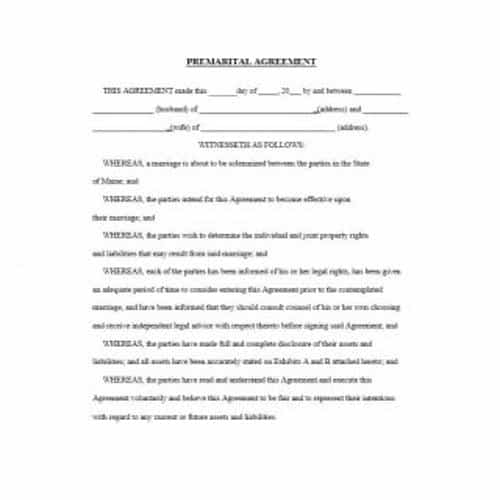
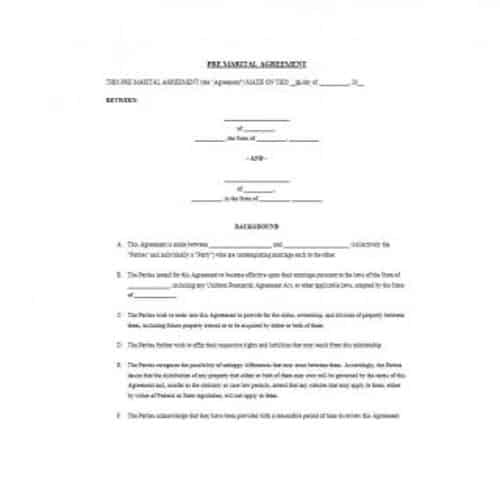
Premarital Agreement Form Template
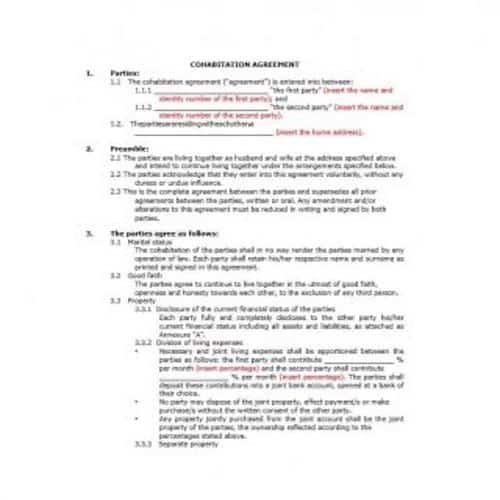
Sample Cohabitation Agreement Template
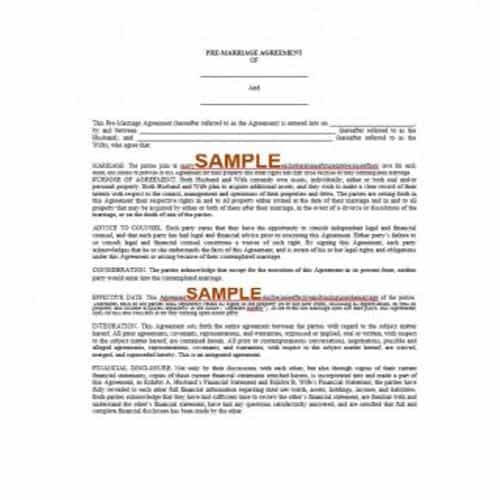
State Specific Premarital Agreement Template
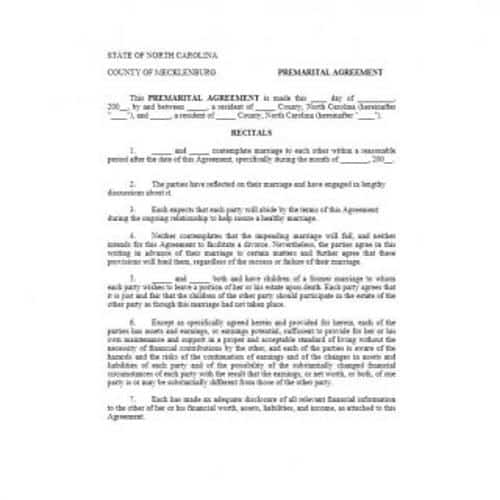
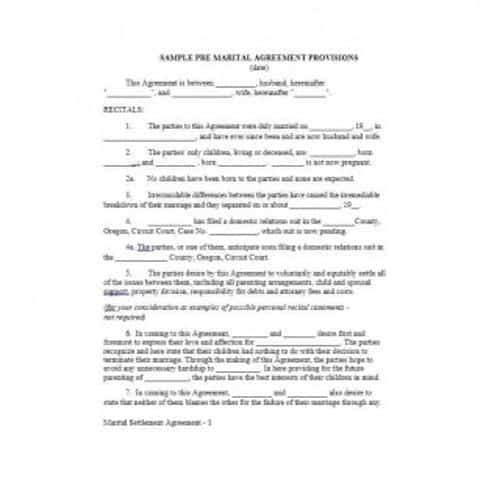
Cohabitation Agreement Provisions Template
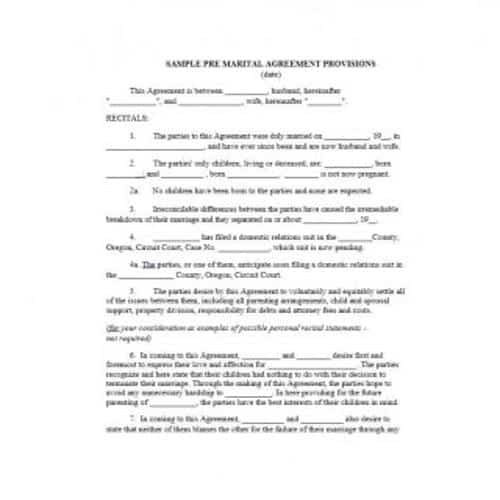
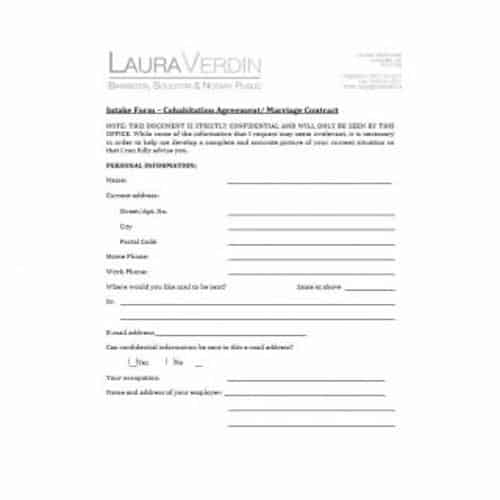
Cohabitation Agreement Intake Form Template
Extensive Cohabitation Agreement Template
Basic Cohabitation Agreement Template
Detailed Cohabitation Agreement Template
Particular Cohabitation Agreement Template
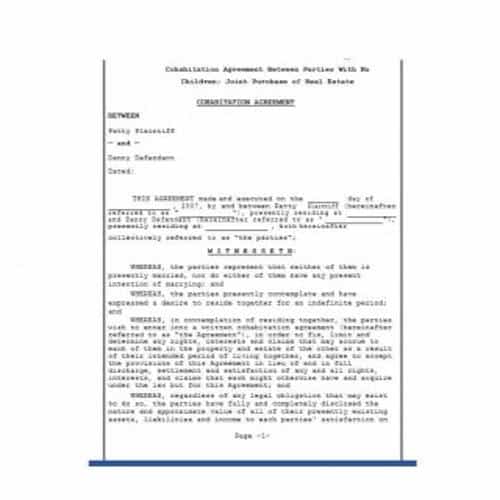
Special Cohabitation Agreement Template
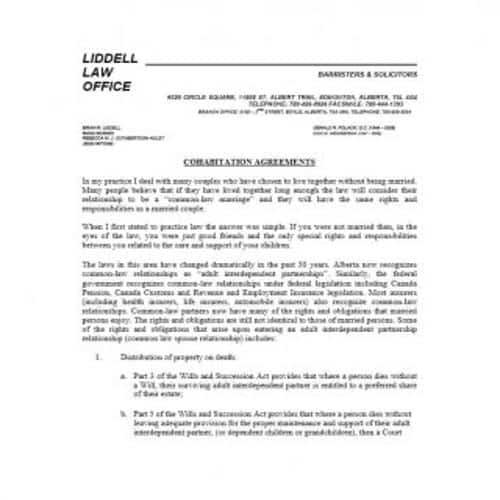
Standard Cohabitation Agreement Template
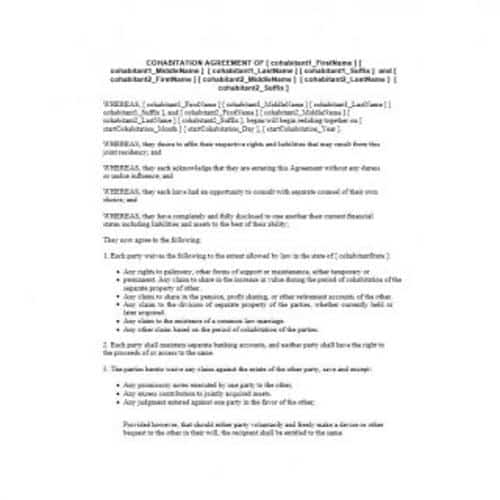
Elementary Cohabitation Agreement Template
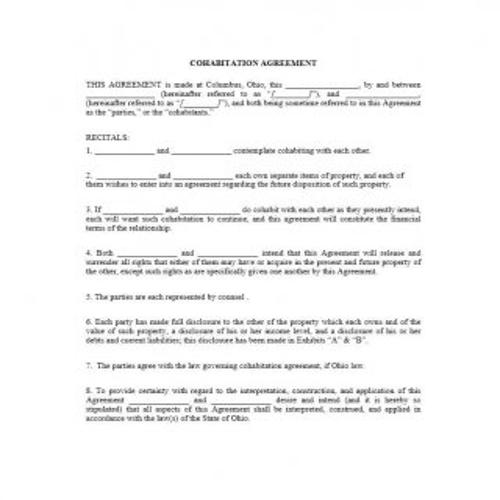
Law Firm’s Cohabitation Agreement Template
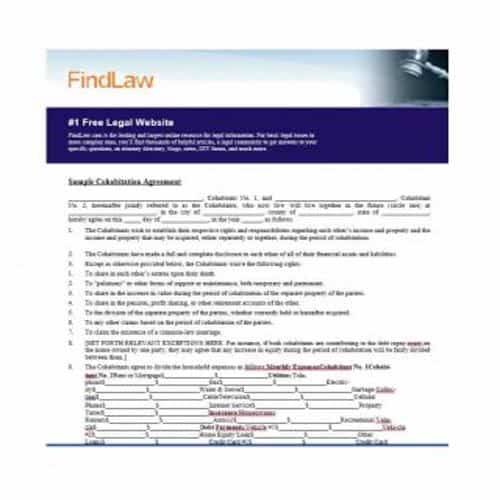
Typical Cohabitation Agreement Template
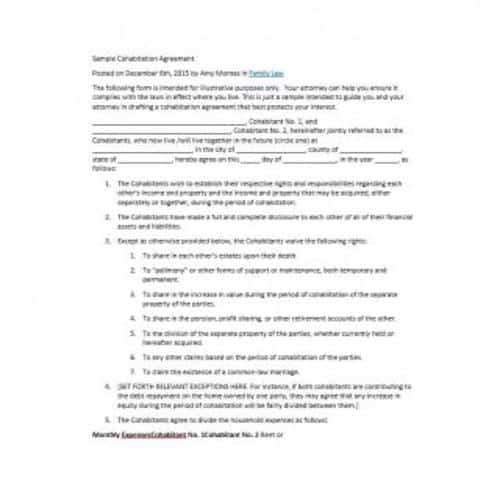
Lengthy Cohabitation Agreement Template
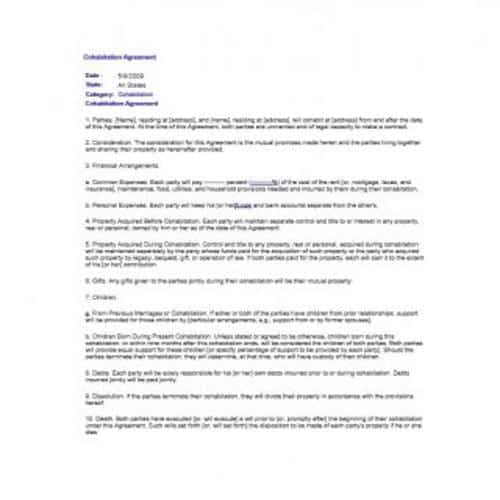
Sample Cohabitation Agreement Template
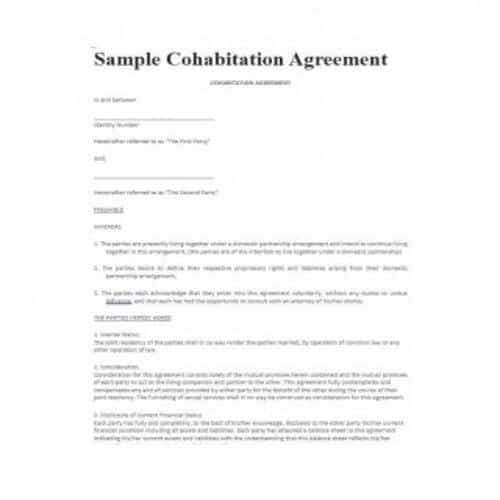
Essential Elements of a Cohabitation Agreement Template
With mutual consent and understanding, the parties to a cohabitation relationship may include any terms or conditions in a cohabitation agreement. The following are some essential elements of a formal cohabitation agreement template.
- The complete title of the agreement, such as “Cohabitation Agreement” or another appropriate title that shows its purpose.
- The complete names of both the parties involved along with the details of their residence.
- That date at which the parties enter into contract.
- A brief statement clearly indicating that the parties have decided, with mutual consent, to live with each other.
- The exact date at which the parties decided and started to live together.
- A brief statement that the parties have entered into a cohabitation agreement to determine the status, possession and division of property that either party or both parties jointly possess, have acquired or will acquire.
- A statement explaining how property or assets acquired together during the relationship will be divided or disposed of if the couple splits up.
- The agreement should also state how debts, incurred separately or jointly by the parties, will be dealt with if the cohabitation agreement comes to an end.
- The parties must acknowledge that, if they break up, any distribution or division of property will follow the agreement and the relevant provisions of state law.
- State whether either party will be entitled to support in the event of a breakup.
- State whether inheritance rights will be provided to each party or to either party. This is required only if each party has their own “Last Will” and “Testament”.
- State the amount of support that will be paid for minor children. if any.
- Both the parties will affix their signatures on such a cohabitation agreement, in the presence of a witness.
Useful Cohabitation Agreement Templates
Formal Cohabitation Agreement Template
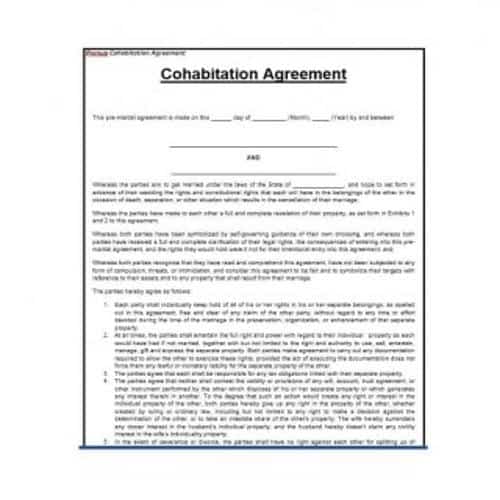
Cohabitation Agreement Format Template
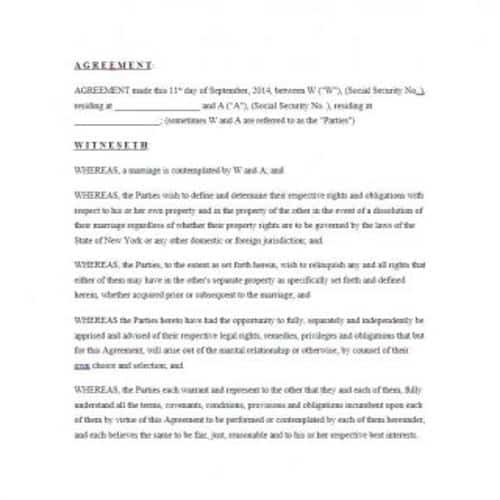
Illustrative Cohabitation Agreement Template
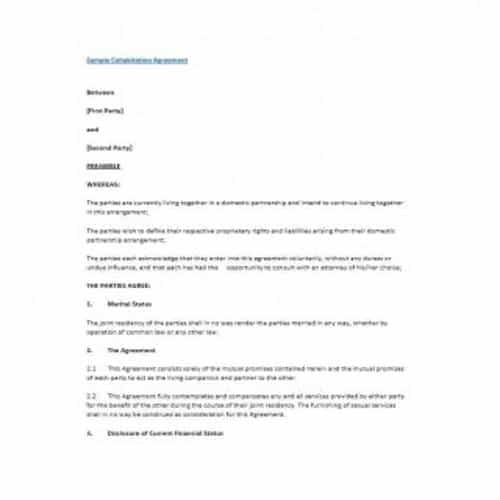
Comprehensive Cohabitation Agreement Template
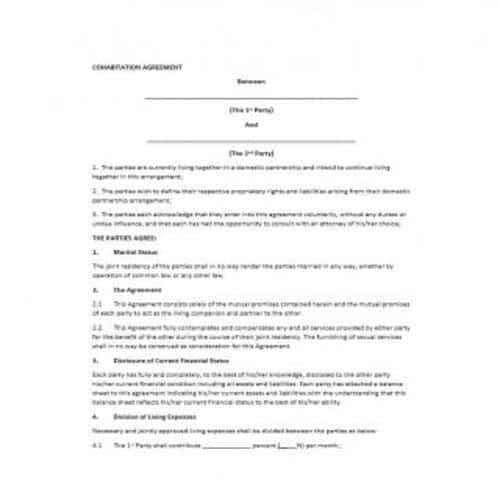
Plain Cohabitation Agreement
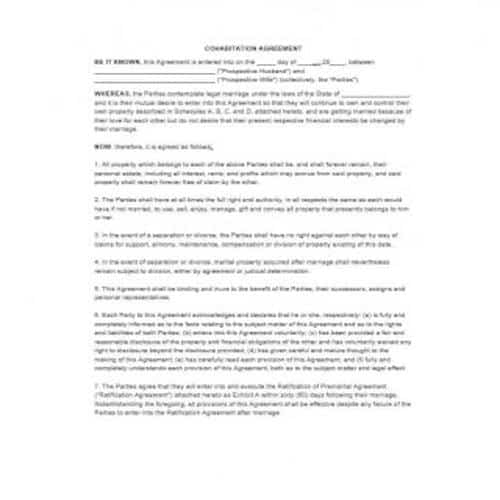
Detailed Live-in Agreement Template
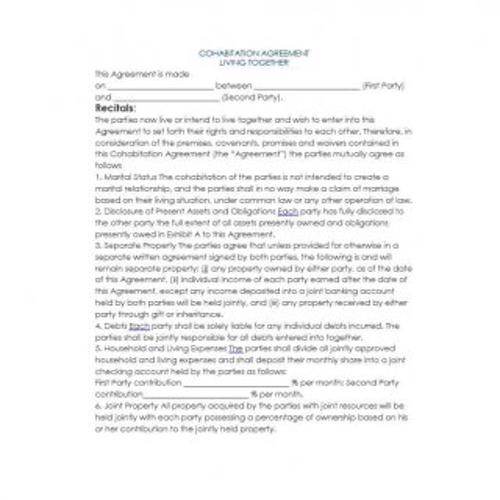
Basic Cohabitation Agreement Form Template
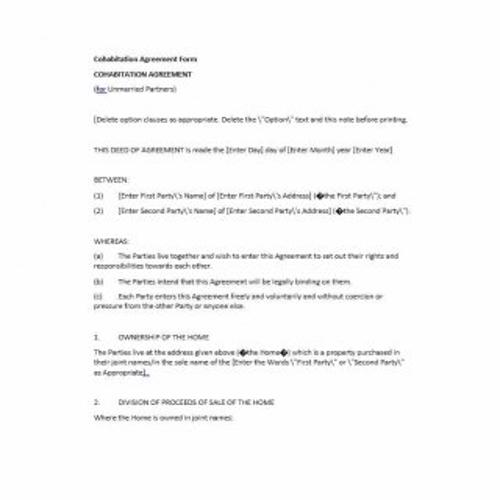
Elaborated Cohabitation Agreement Template
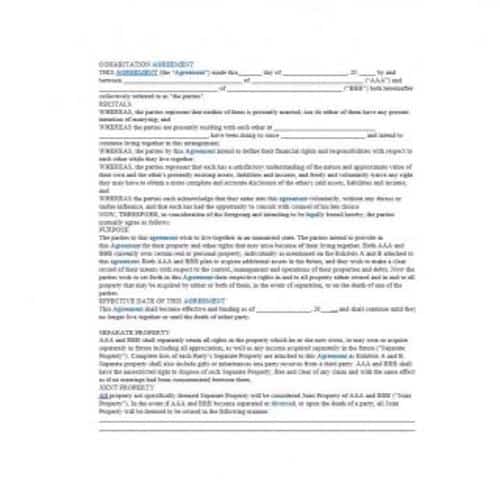
Proper Cohabitation Agreement Template
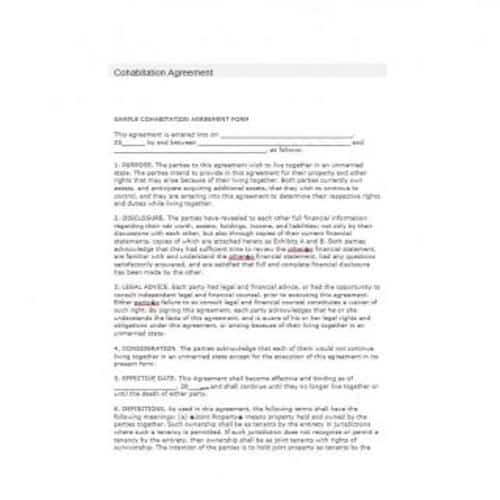
Basic Premarital Agreement Template
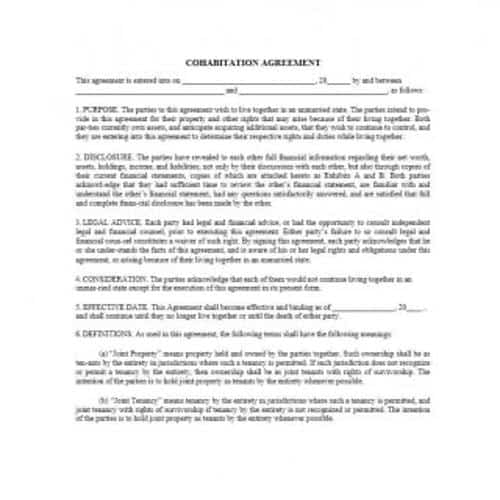
Thorough Cohabitation Agreement Template
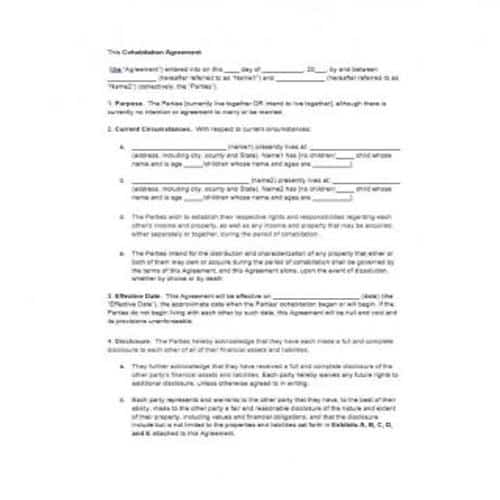
Particular Cohabitation Agreement Template
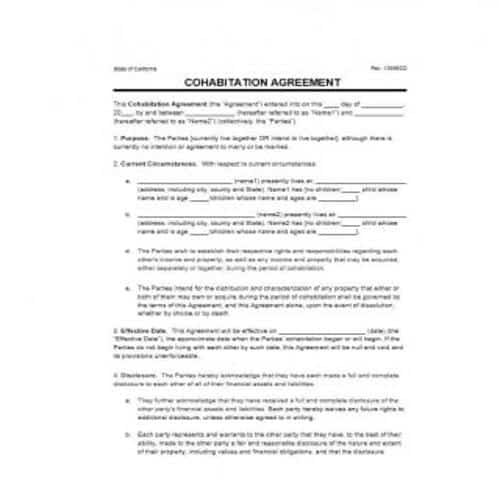
Regular Cohabitation Agreement Template
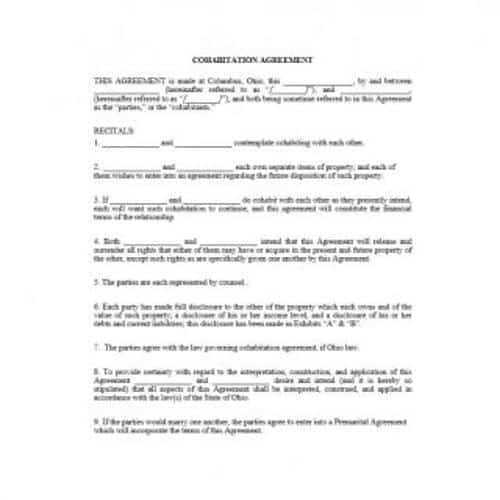
Elemental Cohabitation Agreement Template
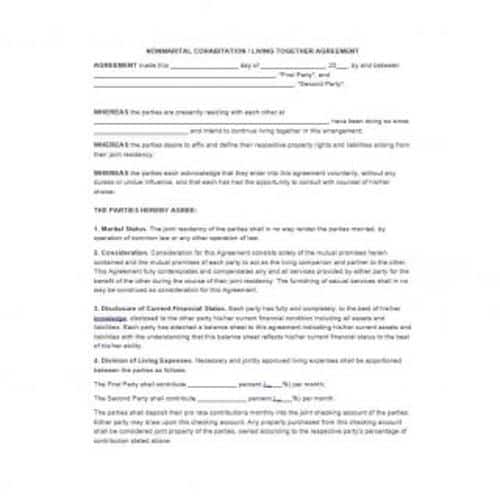
Example Cohabitation Agreement Template
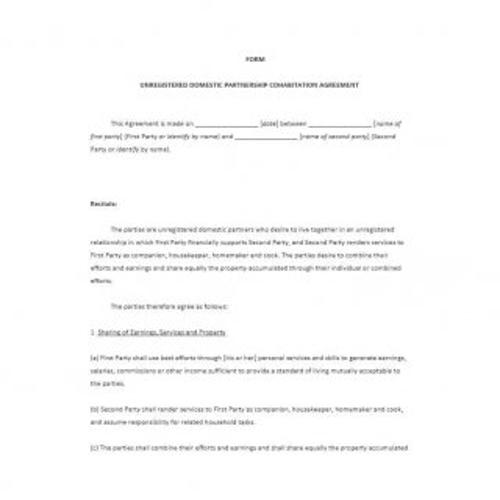
Complete Cohabitation Agreement Template
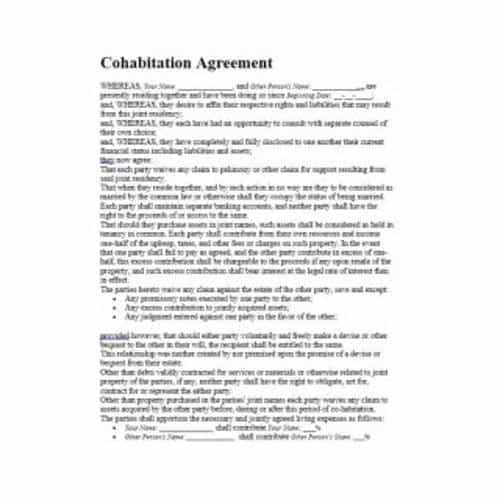
Difference between Cohabitation Agreement and Marriage
Many factors make a cohabitation agreement different from a marriage. Some of the important points are listed below:
Cohabitation Agreement
- Two parties can enter into a cohabitation relationship regardless of time, age and gender, without any legal or formal requirements.
- If things are not working out, these relationships can be ended informally, with just a mutual agreement or understanding between the parties.
- At the end of the relationship, the parties can share their property in any way they choose, with mutual consent.
- The parties to a cohabitation agreement are not legally bound to support each other after the relationship ends, unless they have a contract to provide such support.
- If a child is born during a cohabitation relationship, the father has to prove his paternity, for example through blood tests.
- Similarly, in a cohabitation relationship, the male cohabitant has no legal obligation to support the child unless paternity is established. Otherwise, he may choose to do so voluntarily.
- In such a relationship, if one party dies, the surviving party has no right to the deceased party’s property. The property will pass to the person named in the deceased party’s will. If there is no will, the property will pass to the deceased’s family members.
- When a cohabitation relationship ends and the child’s parentage is established, the non-custodial parent must support the child in the same way as divorced parents do.
Marriage
- A marriage requires many legal requirements and formalities, which vary from state to state. These include obtaining a marriage license, meeting the minimum age, blood tests and the presence of witnesses.
- A marriage ends with a formal divorce or through rescission. This can be very painful, costly, time-consuming and exhausting.
- After a divorce, the couple must share or distribute their property according to legally specified methods.
- After a divorce, the spouse earning more income is required to provide financial support to the other spouse.
- The child born during a marriage automatically indicates and establishes the paternity of both spouse.
- Any children born to a couple during the marriage must be financially supported.
- If a spouse dies, the surviving spouse has a legal right to inherit a share in the deceased spouse’s estate or property.
- When a marriage ends, a child born during the marriage has a right to financial support from the non-custodial parent.
Discussing a Cohabitation Agreement
Use the layout to identify decisions the parties need to discuss, then obtain independent advice appropriate to the location. Property, financial and family-law effects cannot be settled by copying a general sample.
- Identify the parties and describe the living arrangement and assets accurately.
- Discuss contributions, expenses, ownership intentions and recordkeeping.
- Address changes or separation through reviewed terms and appropriate execution.
Worked Example
Example: one person owns the home while both contribute to monthly expenses. The agreement should distinguish ordinary living costs from any intended interest in the property. Do not assume that paying a bill automatically establishes, or excludes, an ownership right.
Common Mistakes to Avoid
Avoid concealing significant obligations or promising that a generic clause overrides local law. Revisit the arrangement after major life or property changes.
Related Templates
- Partnership Agreement Templates
- Letter of Intent to Purchase Property Templates
- Founders Agreement Templates
- Vehicle Purchase Agreement Templates
Frequently Asked Questions
Is paying household expenses the same as owning part of the home?
Do not assume the two are equivalent. The effect depends on the facts, agreement and applicable law; obtain advice and document the intended arrangement clearly.
Should both people obtain advice?
Independent advice can help each person understand the terms and implications. Use appropriate local professional guidance before relying on a signed document.
